There is a kind of amnesia that comes with success. By the time Bitcoin crossed into the mainstream spotlight around 2020 and 2021, most of the cultural memory of what had almost torn it apart was already buried beneath price charts and institutional press releases. This is a piece for those who remember the chaos — the human side of bitcoin nostalgia at its rawest and most conflicted.
The loudest, most human moment in Bitcoin's entire history was not a bull run. It was not a hack, a heist, or a headline. It was a civil war fought over a single number: the size of a block.
And it nearly ended everything.
The Problem That Refused to Go Away: Why Block Size Mattered
To understand what the Blocksize War was actually about, you have to go back to a small, almost invisible decision Satoshi Nakamoto made in the early code.
In 2010, Satoshi introduced a 1-megabyte limit on the size of each block in the Bitcoin blockchain. The original purpose was simple and practical: to prevent spam attacks on the still-fragile network.
At the time, Bitcoin was processing only a handful of transactions per day. A 1MB limit was effectively invisible. It might as well have been a speed limit sign on an empty road in the desert.
But Bitcoin did not stay empty. And by 2015, that road was getting crowded.
When the Backlog Started Building
As more people began using Bitcoin between 2013 and 2015, transactions began to pile up in what is called the mempool, essentially a waiting room for unconfirmed transactions.
When the mempool got congested, users had to pay higher fees to get their transactions processed quickly. For small payments or everyday use cases, this started to feel completely impractical.
I remember reading through the developer mailing lists and forum threads around that time, watching incredibly smart people talk past each other at escalating volumes. One side said: raise the block size limit. More capacity, simpler solution. The other side said: no, that threatens decentralization. Bigger blocks mean fewer people can run full nodes.
What looked like a technical argument was actually a philosophical one. And those are always the most dangerous kind.
Two Camps, One Network: The Factions That Formed
The Blocksize War did not happen overnight. It was a slow boil that eventually split the Bitcoin community into two recognizable camps by 2016.
The Big Blockers argued that Bitcoin's original purpose was peer-to-peer electronic cash. To serve the world, they said, the network needed to scale on-chain. Raise the block size. Let the network grow. Trust the market.
The Small Blockers, many of them aligned with the Bitcoin Core development team, argued that bigger blocks would make it harder and more expensive for ordinary people to run full nodes. If only large, well-funded entities could afford to validate the chain, then Bitcoin would slowly become centralized and ultimately controllable.
Both sides were arguing for a version of Bitcoin they genuinely believed in. That is what made it so bitter.
The Personalities Behind the Battle
Names that were household words in the early Bitcoin community became battle lines. Gavin Andresen, once considered Satoshi's chosen successor as the lead developer, aligned with the Big Blocker argument. Roger Ver, known widely as Bitcoin Jesus for his early evangelism, became one of the loudest public advocates for bigger blocks.
On the other side, developers within Bitcoin Core, along with researchers and node operators around the world, held firm on the principle that on-chain scaling was a trap that would sacrifice decentralization for throughput.
Mining pools, businesses, exchanges, and ordinary users were all forced to choose sides. Memes were made. Forum accounts were banned. Old friendships dissolved over comment threads.
This was not just a technical disagreement. It was a fight over the soul of what Bitcoin was supposed to be.

SegWit and the Stalemate: When Code Became Controversial
The Bitcoin Core developers did not simply say no to scaling. They proposed a solution: Segregated Witness, known almost universally as SegWit.
The SegWit proposal was technically clever. Rather than simply raising the block size limit, it restructured how transaction data was stored, effectively increasing the capacity of each block without changing the 1MB limit directly. It also fixed a long-standing technical vulnerability called transaction malleability, which was essential for second-layer solutions like the Lightning Network to eventually function.
SegWit was first proposed by Bitcoin Core developer Pieter Wuille in late 2015 and formally codified as BIP 141 in 2016.
And then, for months, it went nowhere.
Miner Resistance and the Politics of Hashpower
SegWit required miners to signal their support in order to activate. Under the rules at the time, 95 percent of blocks needed to signal for SegWit within a given difficulty period for it to lock in.
That threshold was never reached. Miners, many of them large operations in China with significant investments in the status quo, did not signal. Some were holding out for a competing proposal called SegWit2x, which would raise the block size to 2MB alongside SegWit. Others were simply stalling.
Weeks turned to months. The community grew furious. And then, something remarkable happened.
The UASF Rebellion: When Users Decided They Had Had Enough
On February 25, 2017, a pseudonymous developer using the name Shaolinfry published BIP 148 on the bitcoin-dev mailing list.
BIP 148 was a User-Activated Soft Fork. The idea was direct and radical: instead of waiting for miners to signal their support for SegWit, ordinary Bitcoin users running full nodes would simply begin rejecting any block that did not signal for SegWit after August 1, 2017.
The miners did not have to agree. The users were going to do it themselves.
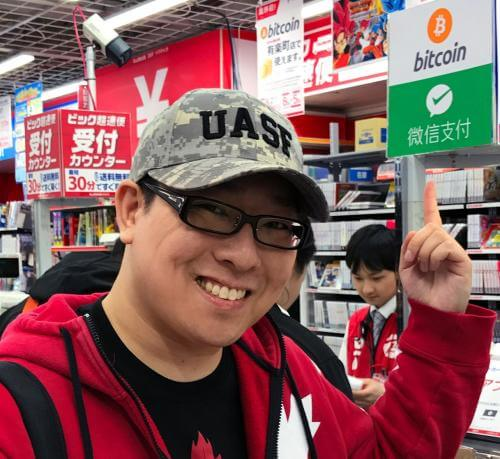
The acronym UASF began appearing everywhere almost immediately. A developer ordered UASF baseball caps and started selling them online. They sold out. People wore them to conferences. Avatars on Twitter changed overnight.
For a moment, the often-abstract idea that Bitcoin's power ultimately resided with its users, not its miners, not its developers, not its corporations, became tangible and visible. It was one of the most memorable acts of collective self-determination in the whole history of the protocol.
The Threat That Worked
The UASF movement created an extraordinary amount of pressure. The prospect of the Bitcoin network splitting in two, with UASF nodes rejecting miner blocks and the chain potentially forking on August 1st, forced everyone to the table.
In May 2017, a group of Bitcoin businesses and miners agreed on what became known as the New York Agreement, sometimes called SegWit2x or the Barry Silbert Agreement after Digital Currency Group's CEO. They would activate SegWit and then, three months later, raise the block size to 2MB.
SegWit locked in on July 21, 2017. It activated on August 24, 2017. The UASF deadline came and passed without a catastrophic chain split.
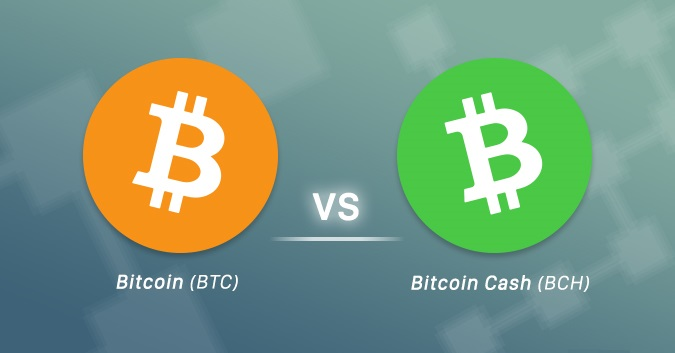
The second part of the agreement, the 2MB block size increase, was eventually called off in November 2017, abandoned after widespread developer opposition. The Big Blocker faction, unsatisfied with SegWit-only scaling, executed a hard fork in August 2017 and created Bitcoin Cash.
The war had an outcome. But it never really ended for everyone involved.
What We Almost Lost, and What We Carried Forward
I want to be honest about something I felt watching all of this unfold from a distance.
The Blocksize War was frightening. Not because I had money in it, but because I had belief in it. I had spent years following Bitcoin as one of the most extraordinary experiments in the history of money and coordination. And there it was, threatening to tear itself apart over kilobytes.
What came through the other side was not a simple victory. It was a harder-won, quieter kind of resilience. Bitcoin did not collapse under the weight of its own contradiction. The community, messy and fractured as it was, found a way through.
SegWit laid the groundwork for the Lightning Network. The UASF rebellion proved that nodes matter, that ordinary participants hold power. Bitcoin Cash became its own experiment, and its supporters found their own path.
From the Bitcoin Nostalgia Archive
A Timeline of Bitcoin Nostalgia: The Iconic Events and Milestones That Shaped Crypto History →For those who want to follow the full arc of events from the earliest days through this pivotal era, this timeline traces the complete journey: from Satoshi's genesis block through the scaling wars and into the institutional era that followed.
Why This Story Belongs in the Archive
The Blocksize War lasted roughly from 2015 to 2017, though its echoes stretched well into 2018 and beyond. It produced one of the most detailed and honest records of how open-source governance can succeed, or fail, under pressure.
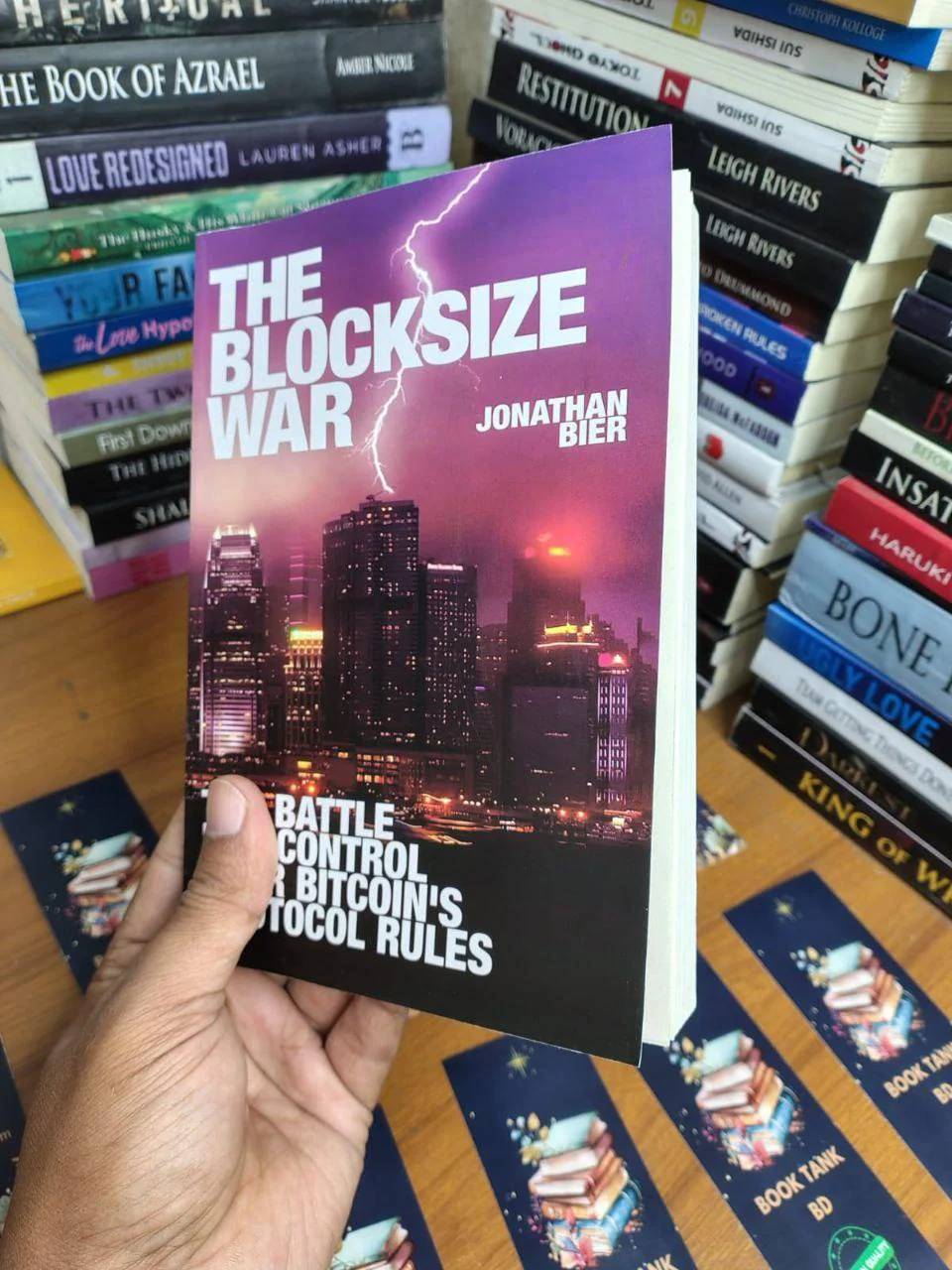
Jonathan Bier's book The Blocksize War, published in 2021, became the definitive historical account for those who wanted the full story reconstructed from primary sources: mailing list archives, forum threads, IRC logs, and contemporary reporting.
The Wayback Machine preserves some of the original forum threads. The bitcoin-dev mailing list archives remain publicly accessible. Pieces of this history survive, but they require effort to find.
That is exactly what this archive exists to change.
Frequently Asked Questions
What was the Blocksize War in Bitcoin's history?
The Blocksize War was a period of intense community conflict, roughly 2015 to 2017, over whether to increase Bitcoin's 1-megabyte block size limit. One faction argued larger blocks were necessary for Bitcoin to scale as a global payment system. The other argued that maintaining small blocks preserved decentralization. The dispute ultimately led to the activation of SegWit in 2017 and the creation of Bitcoin Cash as a separate network.
What does UASF stand for and why was it significant?
UASF stands for User-Activated Soft Fork. It referred specifically to BIP 148, a proposal that allowed Bitcoin full node operators to enforce SegWit activation independently of miner signaling. It was historically significant because it demonstrated that economic nodes run by ordinary users, not just miners or developers, held genuine power in Bitcoin's governance. The UASF movement is considered one of the most important expressions of decentralized community action in the protocol's history.
What was SegWit and why did it matter?
SegWit, short for Segregated Witness, was a soft fork upgrade to Bitcoin formalized as BIP 141 and activated in August 2017. It restructured how transaction signature data was stored, effectively increasing block capacity and fixing transaction malleability. SegWit was foundational to second-layer development, most notably the Lightning Network, and remains active in Bitcoin today.
What happened to Bitcoin Cash after the fork?
Bitcoin Cash launched in August 2017 as a hard fork of Bitcoin, carrying an increased block size of 8MB at the time of its creation. It has undergone several subsequent forks of its own, including the creation of Bitcoin SV in 2018. It continues to operate as a separate network with its own development community, distinct from the Bitcoin mainchain.
Where can I read the original primary sources from the Blocksize War?
The bitcoin-dev mailing list archives are publicly accessible and contain the original BIP 148 submission by Shaolinfry along with years of preceding debate. Bitcointalk.org retains archived threads from the period. The Wayback Machine at web.archive.org preserves snapshots of key pages and discussions. Jonathan Bier's 2021 book The Blocksize War is the most comprehensive secondary reconstruction from these primary sources.
Help Keep This Memory Archive Alive
Every thread that disappears, every forum that goes offline, every mailing list that stops being archived takes a piece of this history with it.
Bitcoin Nostalgia exists to make sure these stories, these arguments, these human moments of chaos and conviction, do not disappear behind the noise of markets and modern media.
If you believe this archive matters, consider keeping it alive. No amount is too small. Every satoshi is a vote for memory over forgetting.
Support Bitcoin Nostalgia
Every satoshi supports the work of preserving the human side of this revolution — one story at a time. Thank you for remembering with us.
bc1qu6v3m430v9ca0kxm3qk8cewcwukmfpf5rqakrj
Keep the memory alive.
Angel
Disclaimer: This article is a historical and cultural archive. Nothing in this publication constitutes financial advice, investment guidance, or price speculation. Bitcoin Nostalgia is a memory archive, not a financial publication. All historical references are based on publicly available records, archived forum posts, and documented community history. Sources include bitcoin-dev mailing list archives, Bitcointalk.org, the Wayback Machine, and Jonathan Bier's The Blocksize War (2021).