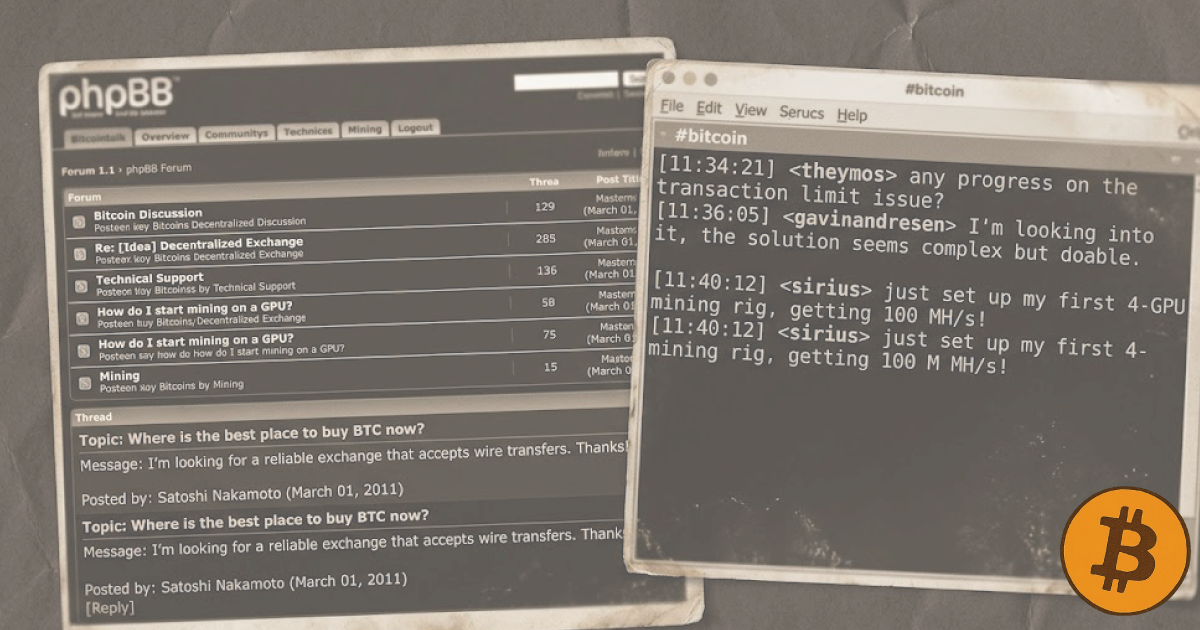
There was a time before Bitcoin had a price. Before it had an exchange rate, a hedge fund, or a CNBC segment breathlessly declaring its death for the fourteenth consecutive year. There was a time when Bitcoin existed only in text.
Just words on a screen. Monospace font. Dark backgrounds. Timestamps from forgotten time zones.
This is the era that bitcoin nostalgia was built to preserve. Not the charts. The conversations.
The cypherpunk forums, the Bitcointalk threads, the IRC channels running at 2 a.m. in 2010. These were not financial marketplaces. They were campfires. And around those fires, a handful of people were speaking a language the rest of the world would not understand for another decade.
I was one of the people watching from outside the firelight. I could not buy in. But I could read. And what I read changed how I understood money, freedom, and the internet forever.
What follows is the archive I wish had existed when I first started paying attention.
The Cypherpunk Mailing List: Where It All Actually Started
Most people trace Bitcoin back to the whitepaper published in October 2008. But the real origin story starts earlier, and it starts in a mailing list.
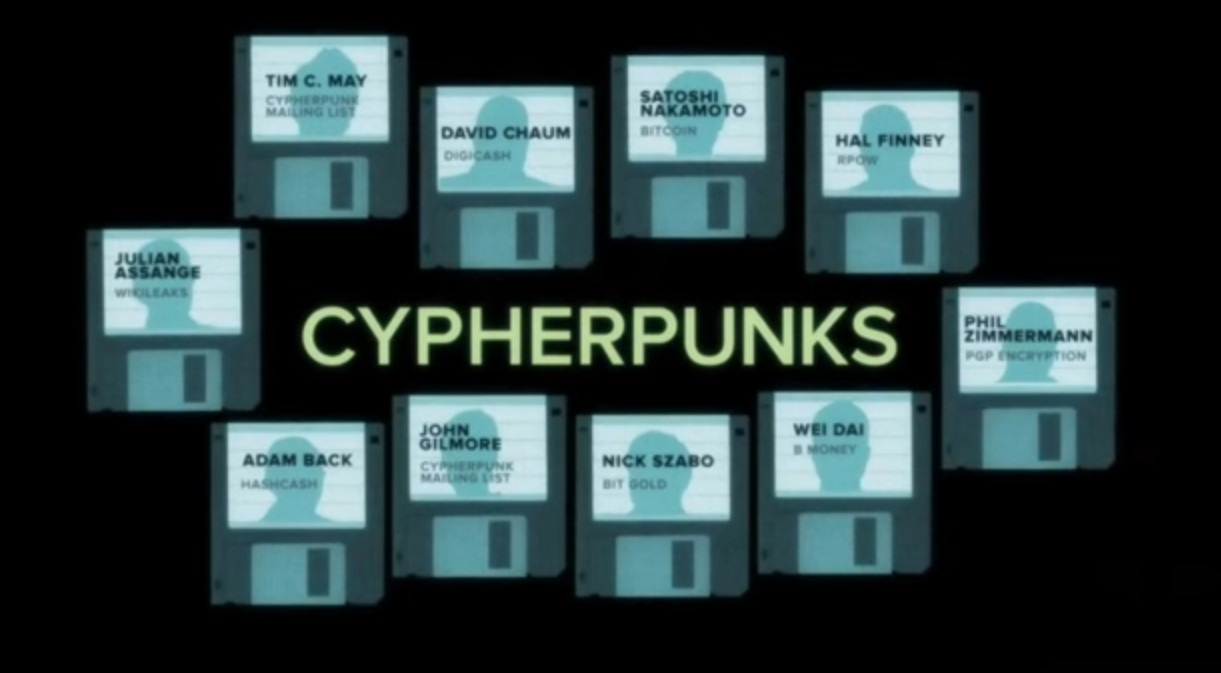
The Cypherpunks Mailing List, active from the early 1990s, was a sprawling, chaotic, and often brilliant conversation between cryptographers, libertarians, hackers, and mathematicians who believed in one core idea: that privacy was a right worth coding into existence.
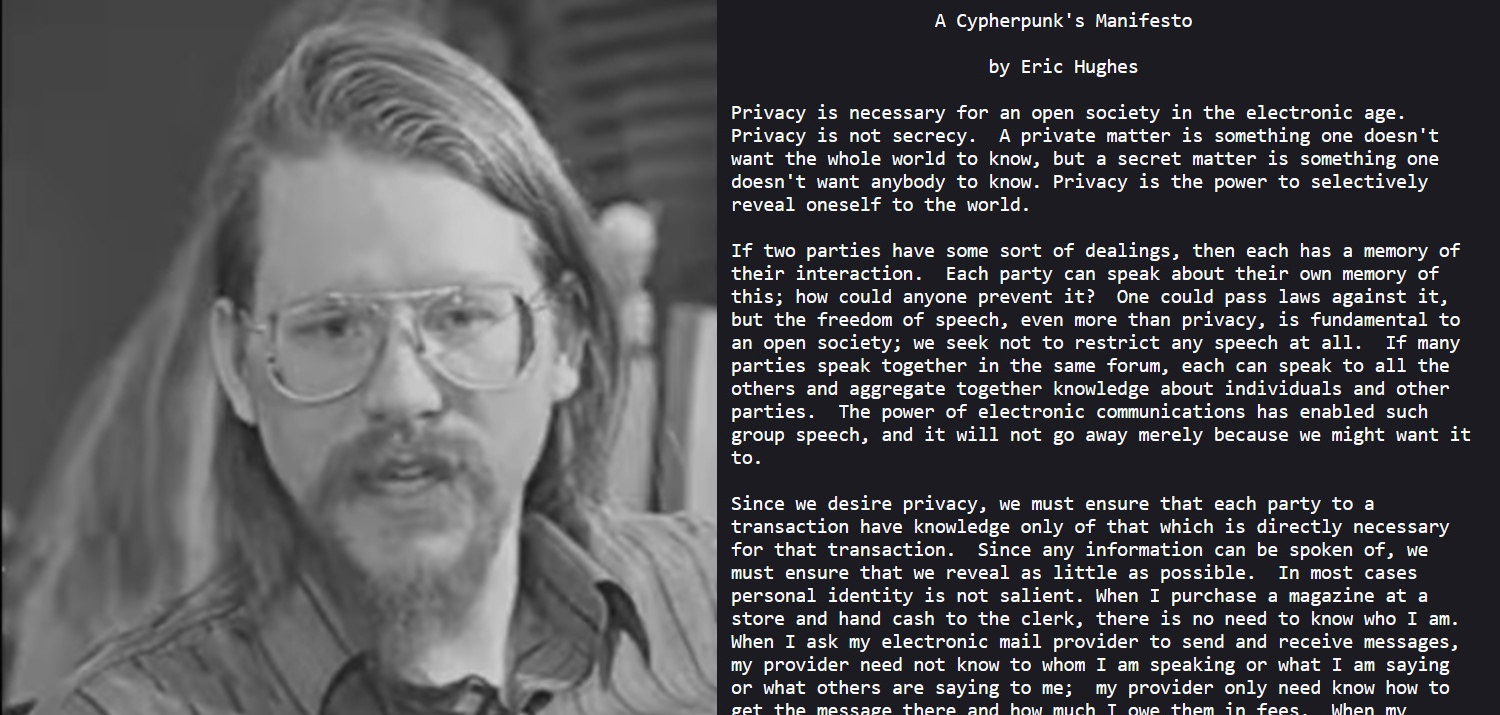
Figures like Eric Hughes, Tim May, and John Gilmore were early architects of the cypherpunk ethos. Hughes published A Cypherpunk’s Manifesto in 1993, and it remains one of the most quietly influential documents in the history of the internet.
The mailing list was not elegant. It was loud, repetitive, and frequently derailed by arguments that would feel familiar to anyone who spent time in early internet forums. But embedded inside those thousands of messages were the technical blueprints and philosophical foundations that Satoshi Nakamoto would eventually synthesize into something real.
Without the cypherpunks, there is no Bitcoin. The mailing list is the origin, and it is almost entirely missing from mainstream crypto discourse.
You can explore a partial archive of those threads at the Cryptome.org cypherpunks archive and through various captures at the Wayback Machine. These are digital ruins worth walking through.
The Manifesto That Made Everything Possible
Hughes wrote in 1993: privacy is necessary for an open society in the electronic age. He was not talking about Bitcoin. Bitcoin did not exist. But he was describing the exact problem that Bitcoin would later attempt to solve.
The cypherpunks were not hobbyists. They were people who looked at the direction of digital infrastructure and felt something close to dread. And they coded in response to that dread.
HashCash, b-money, Bit Gold. These were the experiments that came before. Each one is a chapter in the history that led to October 31, 2008, when an unknown person using the name Satoshi Nakamoto sent a nine-page PDF to a cryptography mailing list.
That email is archived. You can still read it. It remains one of the most understated introductions in the history of technology.
Bitcointalk: The Forum That Built a Religion
Satoshi Nakamoto did not just publish a whitepaper and disappear. For two years, from 2009 to 2010, Satoshi was an active participant in the community he created. And the primary stage for that participation was Bitcointalk.org.
Bitcointalk was founded by Satoshi in November 2009. It was simple, utilitarian, and visually unremarkable. It looked like every other phpBB forum of that era. But what happened inside it was anything but ordinary.
The forum became the nerve center of the early Bitcoin world. Mining questions, technical proposals, wallet discussions, wild speculation, heated debates about governance, and moments of genuine discovery all played out in threads that are still accessible today through the Wayback Machine and through Bitcointalk’s own archives.
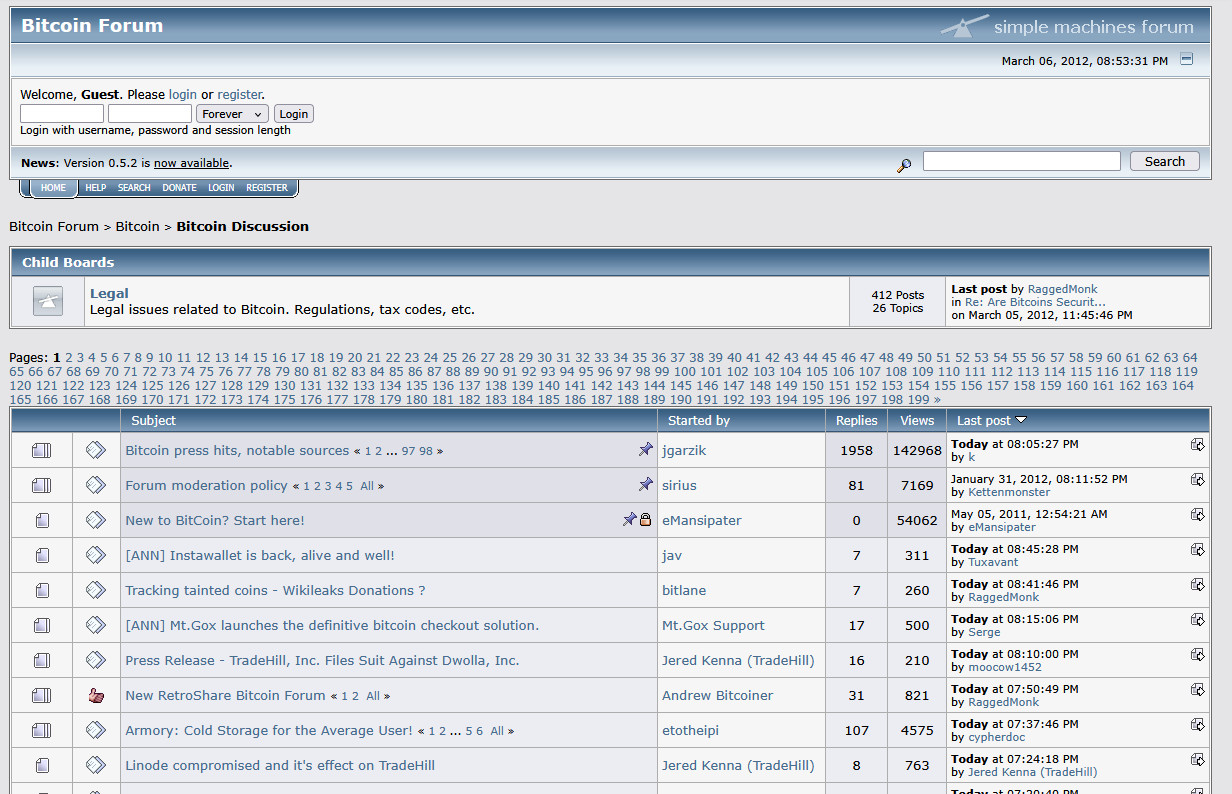
I remember reading through those threads years after the fact, sometime around 2012 or 2013, when Bitcoin had started appearing in tech blogs I followed. The timestamps were disorienting. These posts were already history and the people writing them had no idea.
The Pizza Post That Changed the World
On May 18, 2010, a Bitcointalk user named laszlo posted a thread titled Pizza for bitcoins?
He was offering 10,000 BTC to anyone who would order him two large pizzas. He explained that he wanted to trade Bitcoin for something real and tangible.
A user named jercos eventually took the deal. Two Papa John’s pizzas were purchased and delivered to Laszlo Hanyecz in Florida. The transaction was later verified and the date, May 22, 2010, became what the community would come to call Bitcoin Pizza Day.
Nostalgic Moment
I first read the original Pizza thread sometime in late 2012. The post itself was casual, almost bored in tone. Laszlo was not making history. He was hungry. He was a programmer who had been sitting on a pile of coins he had mined himself and wanted to see if they were worth anything at all in the physical world.
That informality is what gets me every time I think about it. History does not announce itself. It just shows up and asks if anyone wants to split a pizza.
The original thread is preserved at Bitcointalk. It is one of the most visited historical posts in the forum’s archives. The thread is part of the foundational record of the early Bitcoin cultural canon, and it is linked from countless retrospectives as a milestone in the story of digital currency finding its footing in the material world.
From the Archive — Memes, Culture & Internet Lore
The Cultural History of Crypto: Vintage Memes, Internet Lore, and the Golden Era of Bitcoin NostalgiaThe forum moments documented here became the mythology of a movement. This archive explores how Bitcoin’s early cultural canon, from Pizza Day to the first memes, shaped the community’s identity for a decade.
The Post That Launched a Thousand Wallets
It was not just pizza. The early Bitcointalk threads were filled with moments that felt small at the time and enormous in retrospect.
There were threads where users discussed whether Bitcoin could ever replace fiat currency. There were debates about whether the mining difficulty algorithm was correctly calibrated. There were panicked posts when early exchanges went offline. There were posts by people who had lost their wallets, lost their private keys, lost access to hard drives containing coins they had mined for fun.
Every thread was a snapshot of a community figuring things out in real time. No playbook. No precedent. Just people typing into the dark.
This is what the institutional era erased from the narrative. The trial-and-error. The chaos. The fact that none of it felt inevitable when it was happening.
The IRC Channels: Where the Real Work Happened
Alongside the forums, a parallel world existed on Internet Relay Chat.
#bitcoin on Freenode was where many of the early developers, miners, and enthusiasts gathered in real time. IRC was the medium of technical coordination for open-source projects in that era, and Bitcoin was no exception.
The logs from those early IRC sessions are fragmentary and scattered. Some have been archived by dedicated historians. Others are simply gone, lost to server resets and expired domain registrations. What survives paints a picture of a community that was simultaneously paranoid, brilliant, generous, and chaotic.
Discussions about vulnerabilities in the early Bitcoin client were handled there. Coordination around mining pools. Urgent conversations when things broke, and things broke fairly often in those early years.
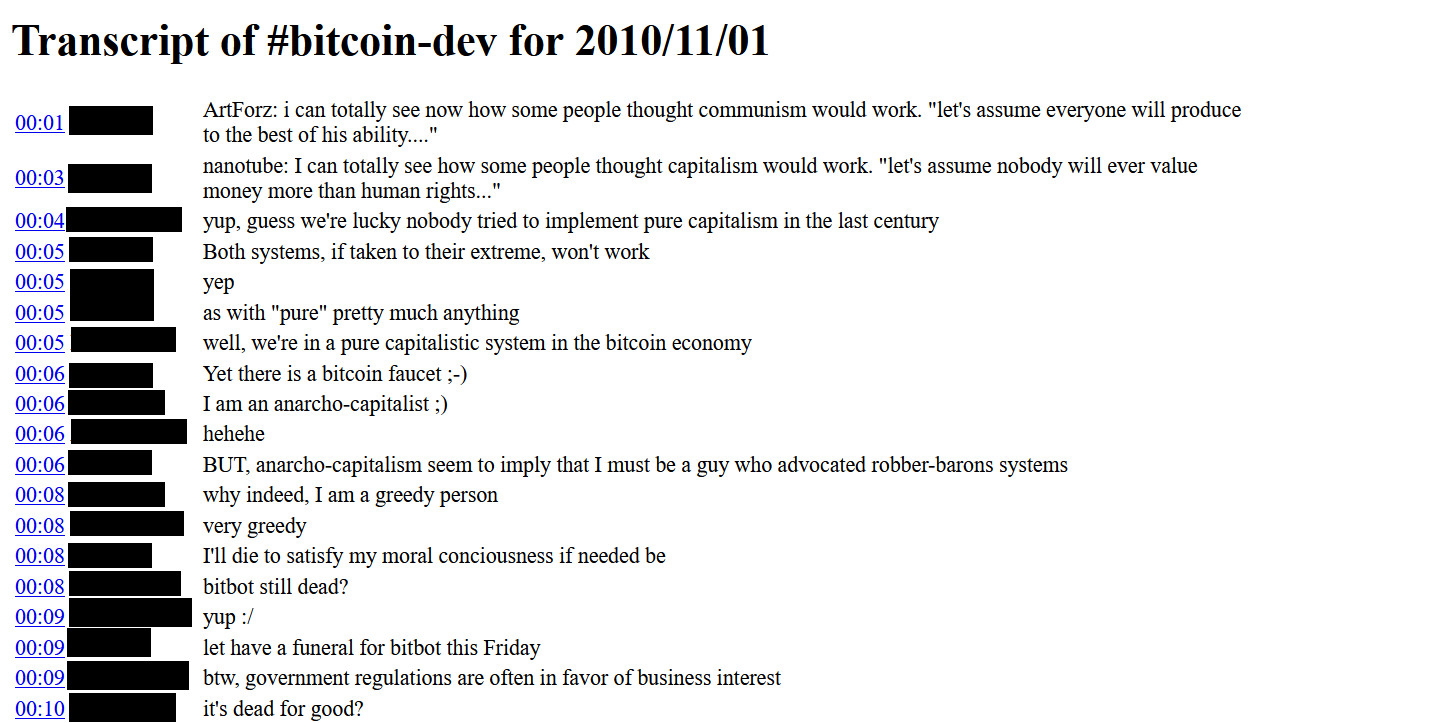
What strikes me most, looking back through the fragments that survived, is the tone. There was a lightness to it. People were genuinely excited. They were not wealthy, most of them. They were not institutional. They were nerds who had found something that felt important and were trying to build it into something real before the rest of the world caught on.
That energy is almost completely absent from crypto discourse today. I do not blame anyone for that. Movements change when they succeed. But preserving the memory of that original tone is part of why this archive exists.
Pillar — Iconic Events & Milestones
A Timeline of Bitcoin Nostalgia: The Iconic Events and Milestones That Shaped Crypto HistoryFrom the first IRC coordination sessions to the institutional era, this milestone timeline maps how a handful of people typing on Freenode became the foundation of a global movement.
The Culture of the Early Threads: Heroes, Trolls, and True Believers
Every community develops its own culture. The early Bitcoin forums were no different. They had their legends, their recurring characters, their inside jokes, and their foundational arguments that echoed for years.
Some of those arguments are still unresolved. The blocksize war, which consumed the community from roughly 2015 to 2017, had its earliest rumblings in Bitcointalk threads that predate the mainstream crypto press by years. Reading those early threads now is like reading the first drafts of arguments that would eventually fork the entire blockchain.
The Character of Satoshi on the Forums
Satoshi was a participant in those early forums, not just a distant architect. He responded to questions, engaged with criticism, and occasionally expressed something approaching frustration when the early community misunderstood his technical choices.
There is a particular quality to Satoshi’s forum writing that I find deeply compelling. It is patient without being condescending. It is confident without being arrogant. It reads like someone who had been thinking about these problems for a very long time and was finally able to show other people the solution they had been building in private.
Satoshi’s last publicly documented forum post is dated December 12, 2010. After that, the messages stopped. The emails to core developers continued briefly, and then those too went quiet.
The disappearance is one of the great mysteries of the early Bitcoin story, and it remains unresolved.
Pillar — Early Days & Genesis
The Genesis Era: A Comprehensive Guide to Bitcoin’s Early Days and Technological OriginsFor a deeper look at the technological foundations Satoshi left behind, this pillar guide covers the whitepaper, the early client, and the first nodes in full archival detail.
The Skeptics and the Believers
Not everyone on the early forums was a believer. Far from it.
Some of the most interesting threads to read in retrospect are the ones where credentialed economists and computer scientists explained, patiently and with great confidence, exactly why Bitcoin could not work and would not last.
They were not entirely wrong. Many of the things they warned about, centralization of mining power, exchange vulnerabilities, regulatory exposure, governance failures, did eventually come to pass in various forms. The history of Bitcoin is not a story of smooth, inevitable triumph. It is a story of constant near-death experiences and improvised survival.
But the skeptics who declared it dead in 2011 were wrong. The ones who declared it dead in 2014 were wrong. The ones who declared it dead in 2018 were wrong.
The early forum record is full of both the warnings and the counter-arguments. Reading them together, without knowing the outcome, is one of the more genuinely humbling historical experiences this archive can offer.
When the Forums Fell Silent: The Fading of the Archives
There is a specific kind of grief that comes from visiting a once-active online community and finding it quiet.
The early Bitcointalk sections on mining, on client development, on philosophical debate have not disappeared. But they have changed. The threads from 2010 and 2011 sit like museum exhibits inside a forum that has largely become a marketplace and a venue for announcements.
The cypherpunk mailing list petered out through the late 1990s and early 2000s, its energy dispersed across a hundred different successor projects and communities. Pieces of it live on through archives, but the living conversation is gone.
IRC logs are the most fragile. Text files hosted on personal servers, subject to link rot and domain expiration. Entire conversations that shaped the early development of Bitcoin’s network exist only as scattered fragments across archive.org captures and the personal hard drives of people who thought to save them.
This is the core concern of bitcoin nostalgia as a project. Not the price. Not the politics. The record. The human record of the people who were present at the beginning and the conversations they had before the world was paying attention.
The archives are not going to save themselves.
Frequently Asked Questions
What was the Cypherpunk Mailing List, and how does it relate to Bitcoin?
The Cypherpunk Mailing List was an email-based forum active primarily in the 1990s where cryptographers, hackers, and privacy advocates debated digital privacy, cryptography, and the concept of electronic cash. The philosophical and technical groundwork laid in those conversations directly influenced Satoshi Nakamoto’s design of Bitcoin. Projects like HashCash and b-money, discussed on the list, are cited as predecessors in the Bitcoin whitepaper itself.
When was Bitcointalk founded and why does it matter historically?
Bitcointalk was founded by Satoshi Nakamoto in November 2009. It served as the primary community hub for early Bitcoin development, discussion, and culture from its founding through the early 2010s. It is where the first real-world Bitcoin transaction (the pizza purchase of May 2010) was publicly arranged and documented. The forum’s archives remain one of the most important primary sources for Bitcoin history.
Can I still read the original early Bitcoin forum threads?
Yes. Bitcointalk.org is still active and its oldest threads remain accessible. The Wayback Machine at archive.org has also captured significant portions of the early forum, including periods when the site experienced downtime. The original cypherpunk mailing list archives are partially preserved through Cryptome.org and other archival projects, though completeness varies significantly.
Who were the key figures in the cypherpunk movement before Bitcoin?
Among the most historically significant are Eric Hughes, who authored A Cypherpunk’s Manifesto in 1993, Timothy C. May, who wrote The Crypto Anarchist Manifesto in 1988, and John Gilmore, one of the list’s co-founders. Later contributors included Hal Finney, who would become one of the first people to run the Bitcoin software and the recipient of the first-ever Bitcoin transaction, and Wei Dai, whose b-money proposal is cited directly in the Bitcoin whitepaper.
What happened to Satoshi Nakamoto’s forum presence?
Satoshi Nakamoto was an active participant on Bitcointalk from the forum’s founding through late 2010. The last publicly recorded forum post attributed to Satoshi is dated December 12, 2010. Communication with core developers continued briefly after that date before going silent entirely around mid-2011. The identity and whereabouts of Satoshi Nakamoto remain unknown. The archived forum posts represent the most complete public record of Satoshi’s voice and technical reasoning that exists.
Keep the Memory Alive
If you were there in those early forums, if you remember the specific feeling of reading a Bitcointalk thread at midnight and wondering whether this thing was going to work, this archive exists for you.
And if you came to Bitcoin later and you want to understand what it felt like before it became a financial instrument, before it became a political symbol, before it became anything other than a strange, beautiful, half-finished idea being argued about on a forum by a few hundred people who had nothing to lose, this archive exists for you too.
The servers cost money. The archival research takes time. If you want to help ensure these stories are not lost to the same link rot and server resets that have already claimed so many early conversations, consider sending a small donation in Bitcoin.
Support the Archive
Every satoshi contributed is a vote for memory over forgetting. Bitcoin Nostalgia runs on community support. Thank you for reading. Thank you for remembering.
bc1qu6v3m430v9ca0kxm3qk8cewcwukmfpf5rqakrj
Every sat counts. Every story matters.
Keep the memory alive.
Angel Salvador Dominguez
Founder & Chief Archivist, Bitcoin Nostalgia
bitcoinnostalgia.org
Disclaimer: This article is a historical and cultural archive. Nothing in this publication constitutes financial advice, investment guidance, or price speculation. Bitcoin Nostalgia is a memory archive, not a financial publication. All historical references are based on publicly available records, archived forum posts, and documented community history. Sources include Wikipedia — Cypherpunk, A Cypherpunk’s Manifesto (activism.net), Bitcointalk.org, Cryptome.org cypherpunks archive, and The Wayback Machine (archive.org).