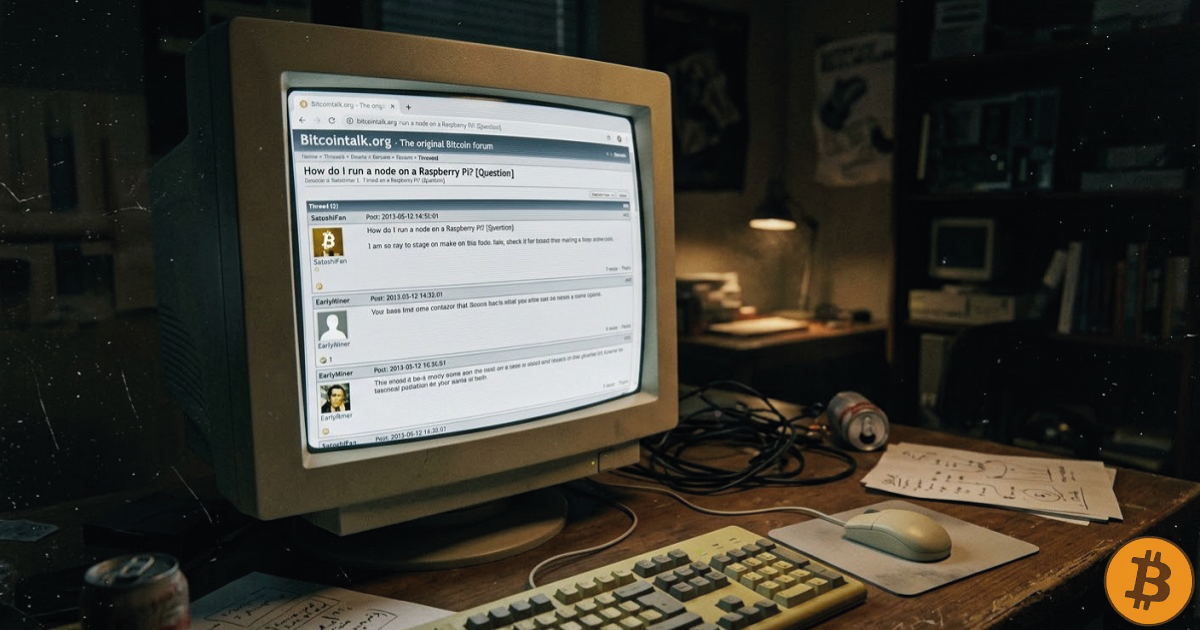
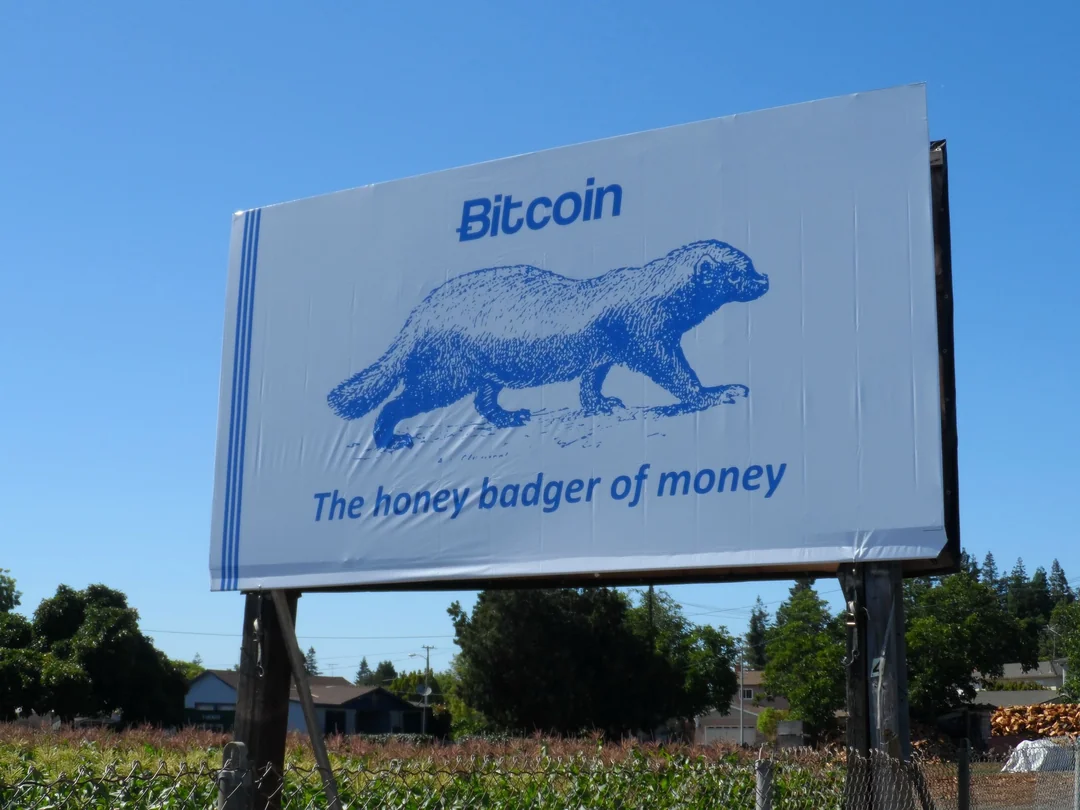
Before Bitcoin had a ticker symbol on a financial terminal, it had something far more interesting. It had a culture. Most people discovered Bitcoin through headlines screaming about price crashes or government crackdowns. But those of us who found it through the forums, the IRC channels, and the late-night blog posts in 2010 and 2011 know a different story entirely. We witnessed something rare: a community of misfits, idealists, and anarchists building not just a currency, but a shared creative language.
The memes, the pixel art, the absurdist humor — all of it was the connective tissue that held together something fragile and electric.
That cultural layer is disappearing fast, buried under institutional press releases and price charts. This archive exists to pull it back into the light. For deeper context on how these memes fit into Bitcoin's broader cultural timeline, visit our pillar page on the cultural history of crypto and the golden era of Bitcoin nostalgia.
The Forum Was the Canvas: Where Early Bitcoin Art Was Born
Before Reddit, before Twitter, before any mainstream platform cared about digital money, there was Bitcointalk.
Launched by Satoshi Nakamoto himself in November 2009, Bitcointalk was the original town square of the Bitcoin world. And like any good town square, it quickly filled with things beyond pure business. It filled with personality.
The early posts were equal parts technical whitepaper and chaotic creativity. People drew crude ASCII art of Bitcoin symbols in their forum signatures. Others crafted early graphics that looked like they were designed on a borrowed copy of MS Paint — and that was entirely the point.
There was no design budget. There was no marketing team. There was only the community, a shared vision, and an almost defiant sense of humor about what they were building.
The Signature Culture of Bitcointalk
If you spent any time on Bitcointalk in 2010 or 2011, you remember the signatures. Forum users decorated their profiles with custom Bitcoin logos, hand-drawn pixel icons, and irreverent slogans.
These were not professional graphics. They were hand-pixeled, often misaligned, and completely genuine. They were the first visual identity of Bitcoin, created by anonymous strangers who believed in something most of the world thought was a joke.
Some users became minor legends for their signature art alone. Long before the concept of a Bitcoin influencer existed, these designers were shaping the visual language of the movement for free.
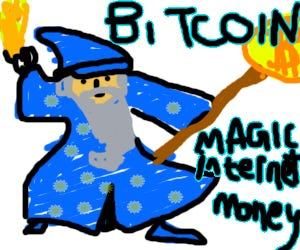
The Birth of Early Crypto Memes: Absurdity as a Shared Language
The early Bitcoin community was a strange gathering of libertarians, cryptographers, tech enthusiasts, and people who simply distrusted banks. They did not always agree on everything. But they shared one thing universally: a dark, recursive, self-aware sense of humor.
The memes that emerged from those early days were not polished. They were not designed for virality. They were created in the moment, passed around small forums and IRC channels, and allowed to evolve organically.
They were also, in their own way, a form of ideological communication.

The Pizza Meme That Started a Holiday
On May 22, 2010, a programmer named Laszlo Hanyecz paid 10,000 BTC for two pizzas. He posted about it on Bitcointalk, asking if anyone wanted to facilitate the trade.
At the time, it was celebrated as proof that Bitcoin could work as a real currency. It was a milestone. Someone on the internet had exchanged digital code for physical food.
But as the years passed and the price of Bitcoin climbed beyond anyone's imagination, that pizza post transformed into something else entirely. It became the foundational meme of Bitcoin culture: a tragicomedy, a cautionary tale, and a celebration all in one.
Every May 22, the community now marks Bitcoin Pizza Day with posts, jokes, and nostalgic remembrances. The meme became a holiday. The holiday became a ritual. That is the kind of organic cultural depth you cannot manufacture.
✦ Nostalgic Moment
In 2010, Bitcoin was nothing more than "magic internet money" and Pizza Day was just a funny anecdote on Bitcointalk. We laughed at the absurdity of the trade, never realizing that every pixel of that post was already worth millions. That was the beauty of those days: nobody knew we were writing history, one slice at a time.
The 'In It For the Tech' Meme
Another piece of early Bitcoin humor that resonated deeply was the ironic refrain of being "in it for the tech."
During the first bull runs, when Bitcoin started climbing and people began checking the price obsessively, a self-aware joke spread through the forums and early subreddits. Users would post screenshots of dramatic price increases and caption them: "I'm only in it for the technology."
It was the community laughing at itself, acknowledging the gap between the idealist rhetoric and the very human excitement of watching a number go up. That kind of self-deprecating humor was uniquely Bitcoin. It had not yet been replaced by the aggressive financial bravado of later eras.
Pixel Art and the DIY Aesthetic: Bitcoin's Visual Identity Before Branding
Something that gets lost when people study Bitcoin's early visual culture is just how much of it was built on a philosophy of make-it-yourself.
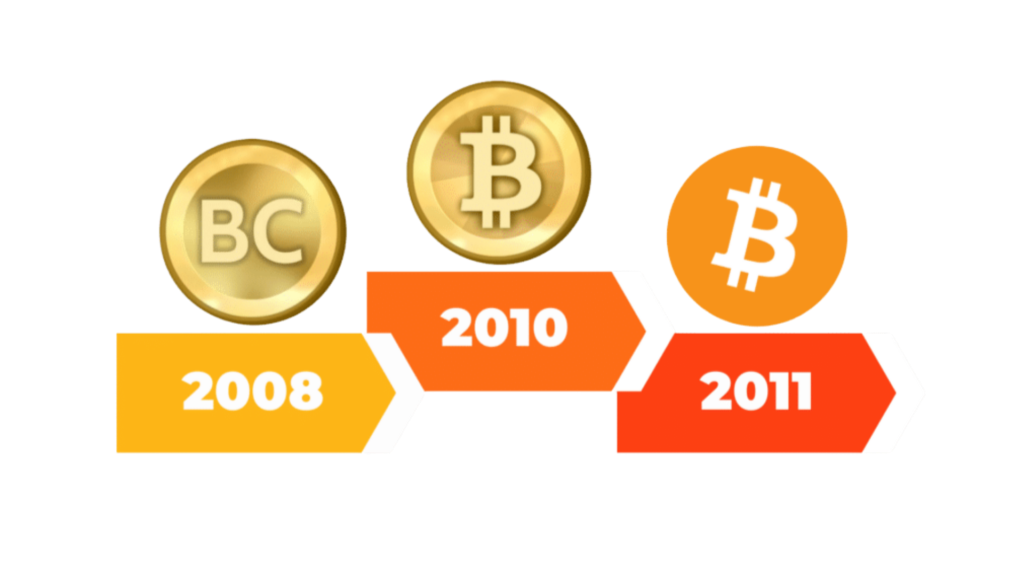
The golden Bitcoin symbol — the circled B with vertical lines — was not the product of a design agency. It went through several iterations in the early community before a version by community member Satoshi himself appeared in the original Bitcoin software. From there, it was remixed, reinterpreted, and applied by hundreds of anonymous creators.
Early Bitcoin adopters placed the symbol on everything: forum avatars, hand-drawn diagrams, crude digital paintings, and yes, eventually T-shirts ordered from obscure online print shops.
The Cypherpunk Aesthetic
The visual culture of early Bitcoin did not emerge from nowhere. It carried strong DNA from the cypherpunk movement of the 1990s — a loosely organized group of programmers and privacy advocates who communicated via mailing lists and believed cryptography was a tool of personal liberation.
The cypherpunk aesthetic was minimalist and functional. Dark backgrounds. Terminal-style fonts. The quiet confidence of people who believed code was more powerful than law.
Bitcoin inherited all of that. The early community graphics, the forum layouts, the custom-built websites dedicated to tracking the price — all of it had that same underground, self-sufficient quality. It was the visual language of people who trusted math over institutions.
The Rise of the Bitcoin Mascot Debates
In the very early years, there were genuine debates on Bitcointalk and associated forums about whether Bitcoin needed a mascot or visual character.
Some users pushed for the B symbol itself. Others wanted something more playful — a digital coin with a face, a cartoon robot, even animals. These debates produced dozens of hand-drawn submissions, most of them completely earnest and charmingly amateur.
None of them stuck. Bitcoin ultimately needed no mascot because the symbol itself became iconic enough. But those forgotten forum submissions are a beautiful artifact of a moment when the rules were still being written.
Archive Note
Many of these early design submissions were posted as image attachments directly on Bitcointalk threads between 2010 and 2012. Most of those image hosts are now defunct. The submissions themselves have been lost — surviving only in the memories of the forum regulars who voted on them.
When the Memes Got Political: Art as Resistance
The early Bitcoin community was not apolitical. Far from it.
A significant portion of early adopters were drawn to Bitcoin precisely because of its philosophical opposition to central banking, government surveillance, and the traditional financial system. And that politics showed up in the art.
Images of the Federal Reserve as a cartoon villain. Bankers in top hats clutching money bags while citizens looked on helplessly. The Bitcoin symbol rising like a sunrise over collapsing fiat currencies. These were not subtle.
They were memes in the truest sense of the word — not just jokes but carriers of ideas, passed from person to person across the early internet, communicating a worldview through humor and imagery.
The 2013 Cyprus Bail-In and the Meme Explosion
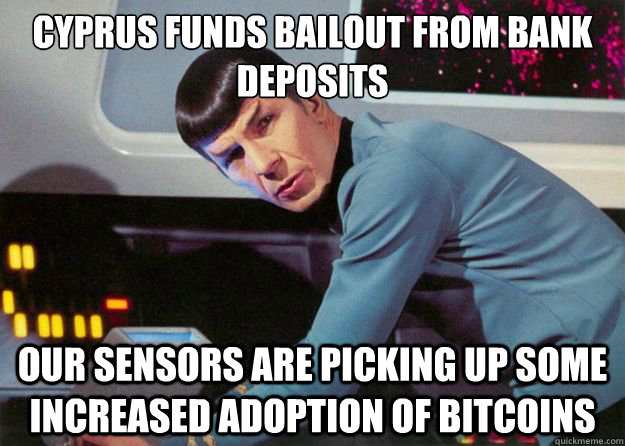
In March 2013, the Cypriot government announced plans to tax bank deposits directly as part of a financial bailout. The reaction from the Bitcoin community was immediate and electric.
Within hours of the news breaking, the forums and early subreddits were flooded with memes. Images contrasting traditional bank customers in long lines with a solitary person on a laptop captioned "Meanwhile, on the Bitcoin network." Cartoons of piggy banks being smashed while a Bitcoin coin floated serenely above the wreckage.
The 2013 Cyprus moment is one of the most striking examples of how early Bitcoin culture used art and humor to make a political argument in real time. The memes were not frivolous. They were the community's way of saying: this is exactly what we warned you about.
Further Reading
The Cultural History of Crypto: Vintage Memes, Internet Lore, and the Golden Era of Bitcoin Nostalgia →Explore the full timeline of Bitcoin's cultural evolution — from cypherpunk mailing lists to viral memes and the moment the mainstream finally caught on.
The Legacy of Early Bitcoin Art: What We Almost Lost
Here is the uncomfortable truth about Bitcoin's cultural heritage: most of it was never archived properly.
The early Bitcointalk threads are still technically accessible, but navigating them feels like reading a damaged library. Links to images are broken. External hosting services for early graphics went offline years ago. Countless pieces of forum art, custom logos, and early meme images simply no longer exist anywhere on the accessible internet.
The Wayback Machine at the Internet Archive has captured fragments. Dedicated historians have pieced together what they could. But the vast majority of Bitcoin's earliest visual culture exists only in the memories of the people who were there.
That is part of why this archive exists. The code may be permanent. The blockchain is immutable. But the culture — the jokes, the pixel art, the political cartoons — all of it is deeply mortal unless we choose to remember it deliberately.
The early adopters who lived through these forums and created this culture deserve to have their contributions remembered alongside the technical achievements. If you are one of them, or if you simply want to ensure these stories survive, we are building this archive together at Bitcoin Nostalgia.
The memes were not frivolous. They were the community's way of saying: this is exactly what we warned you about.
Frequently Asked Questions
Where did early Bitcoin community art actually appear?
The majority of early Bitcoin art, graphics, and meme culture appeared on Bitcointalk.org (launched in 2009), early Bitcoin subreddits, IRC channels like #bitcoin on Freenode, and personal blogs run by community members. These platforms had minimal moderation and encouraged creative expression alongside technical discussion.
What were the first Bitcoin memes?
The earliest recurring memes included variations on the Bitcoin Pizza transaction (May 2010), ASCII art posted in Bitcointalk signatures, satirical images mocking mainstream financial institutions, and the recurring joke format of being "in it for the technology." These memes emerged organically from a community that communicated primarily through text-based forums.
Who designed the original Bitcoin symbol?
The iconic circled-B Bitcoin symbol was refined through several community iterations. Satoshi Nakamoto contributed an early version as part of the original Bitcoin software graphics in 2009, and the design was subsequently adapted and standardized by community members over the following years. There was no formal design process — it emerged collaboratively from an anonymous community.
Why did the early Bitcoin community use so much humor and satire?
The early community was composed largely of cypherpunks, libertarians, and idealists who were treated as fringe figures by the mainstream. Humor and satire served as both a coping mechanism and a rhetorical tool, allowing community members to critique the traditional financial system in accessible, shareable ways without requiring technical background knowledge.
Are any of these early Bitcoin memes and artworks preserved anywhere?
Partial archives exist through the Wayback Machine (web.archive.org), which captured snapshots of Bitcointalk and early Bitcoin sites. However, many original image files were hosted on now-defunct external services and are permanently lost. Independent archivists and communities like this one are working to reconstruct and preserve what remains.
Help Keep This Archive Alive
The stories in this archive were never written for profit. They were written because these memories matter, and because a revolution without a recorded culture is a revolution half-forgotten.
If the early days of Bitcoin mean something to you — whether you were there or you discovered it years later through someone else's memories — consider helping this archive continue its work.
Every contribution, no matter the size, keeps the servers running, the research ongoing, and the stories visible to the next generation of crypto historians.
If you would like to support this memory archive with a Bitcoin donation, you can send any amount here to help preserve Bitcoin's cultural history. No amount is too small. Every satoshi is a vote for keeping these stories alive.
Support Bitcoin Nostalgia
Every satoshi helps preserve these histories — making them available for anyone who wants to remember where this all began.
bc1qu6v3m430v9ca0kxm3qk8cewcwukmfpf5rqakrj
I never owned a single Bitcoin during those golden years. I watched from the sidelines, broke and fascinated, reading every forum post I could find on borrowed Wi-Fi and library computers. What I did collect was the culture: the jokes, the arguments, the strange beauty of a community building something it barely understood.
That collection is this archive. And it belongs to all of us.
Keep the memory alive. — Angel
Disclaimer: This article is a historical and cultural archive. Nothing in this publication constitutes financial advice, investment guidance, or price speculation. Bitcoin Nostalgia is a memory archive, not a financial publication. All historical references are based on publicly available records, archived forum posts, and documented community history. Sources include archived Bitcointalk threads, the original Bitcoin whitepaper, and records preserved through the Wayback Machine.