Imagine holding something in your hand and having absolutely no idea what it is worth. Not because you are careless. Not because you are naive. But because the world had not caught up yet.
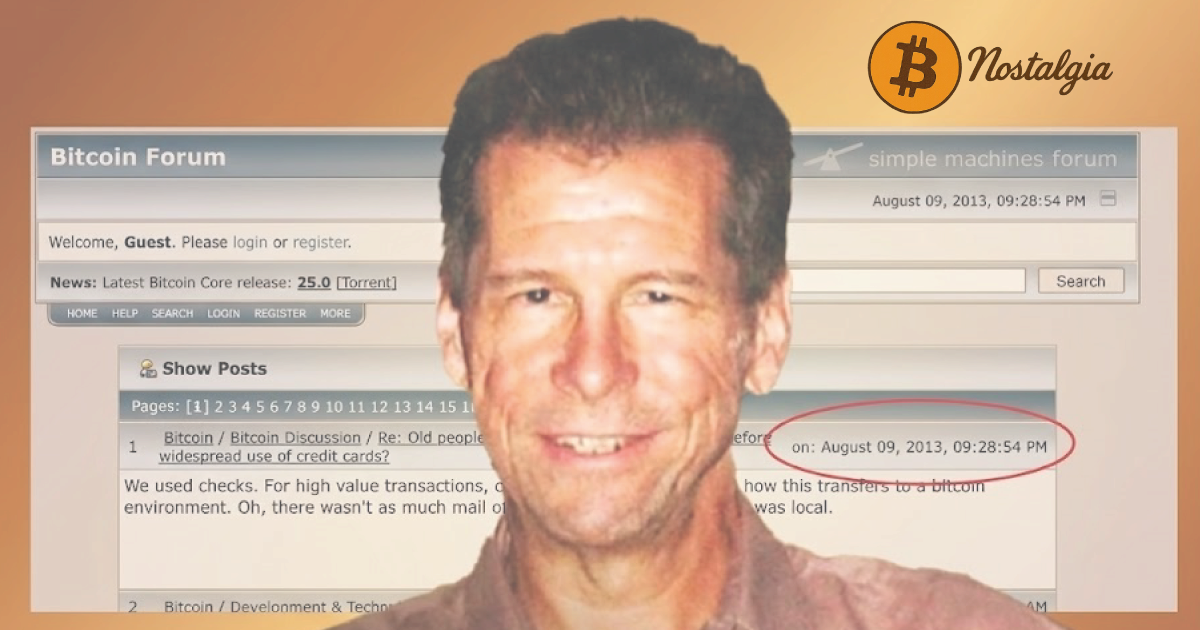
That was Bitcoin in 2010. A fraction of a cent per coin. A curiosity. A line of code passed between cryptographers and hobbyists on a forum most of the world would never find.
Somewhere between that $0.0008 price tag and the $70,000 peak of 2021, an entire generation of early Bitcoin adopters lived one of the most emotionally extreme financial journeys in modern history. Some got rich. Many watched it happen from the outside. And almost all of them carry a feeling about those years that no price chart will ever fully capture.
This is not a story about money. This is a story about what it feels like to watch history unfold in real-time, through a forum thread at 2 a.m., and to wonder, for the rest of your life, what you almost touched.
That feeling is the heartbeat of bitcoin nostalgia.
The Days When Bitcoin Was Worth Less Than a Penny
The Price Nobody Took Seriously
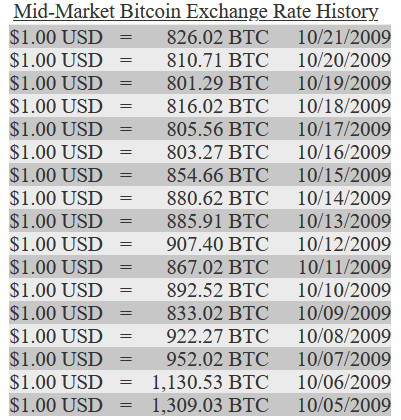
On October 5, 2009, the New Liberty Standard published the first known exchange rate for Bitcoin: 1,309.03 BTC for $1.00 USD. That worked out to roughly $0.00076 per coin.
Read that again. Thirteen hundred coins for one dollar.
By mid-2010, the price had crept up to $0.0008. The forums on Bitcointalk were alive with debates about whether these numbers meant anything at all. A few users discussed trading coins for actual goods, mostly as a proof-of-concept. The world-famous 10,000 BTC pizza transaction on May 22, 2010, the day Laszlo Hanyecz paid a fellow forum user in Bitcoin for two Papa John's pizzas, entered history not as a financial triumph but as a technical milestone. Someone had actually used this thing.
Those of us watching from the outside did not think in terms of investment. The conversation was about the idea. Could a currency exist that no government controlled? Could code replace trust? Those questions felt radical and theoretical, not financial.
No one was calculating future returns. No one had a spreadsheet. There were just ideas, excitement, and a handful of forum posts that moved faster than any of us could fully process.
2011 to 2013: The First Wave of Believers and the First Wave of Doubt
The First Time the World Noticed
By February 2011, Bitcoin crossed $1.00 for the first time. On the forums, you could feel a shift. The tone changed from hobbyist enthusiasm to something quieter and more serious. Some users posted that they were buying. Others laughed at them.
Then in June 2011, the first major bubble arrived. Bitcoin surged to nearly $32 on the Mt. Gox exchange. Tech media started to notice. Wired and Gawker published articles. For a brief, electric moment, it felt like the world was finally paying attention.
Then it crashed back down to $2.00.
The early adopters who had held through it, the ones who had mined coins on graphics cards in their college dorms or purchased early on the forums, had just survived their first gut-wrenching ride. Some sold. Some held. And some, who had just been introduced to Bitcoin by that initial wave of media coverage, bought in at $30 and watched in silence as their investment collapsed.
The 2013 Bull Run: When Everything Changed
I remember 2013 the way you remember a thunderstorm that arrived without any warning. The price climbed. Slowly at first, then explosively.
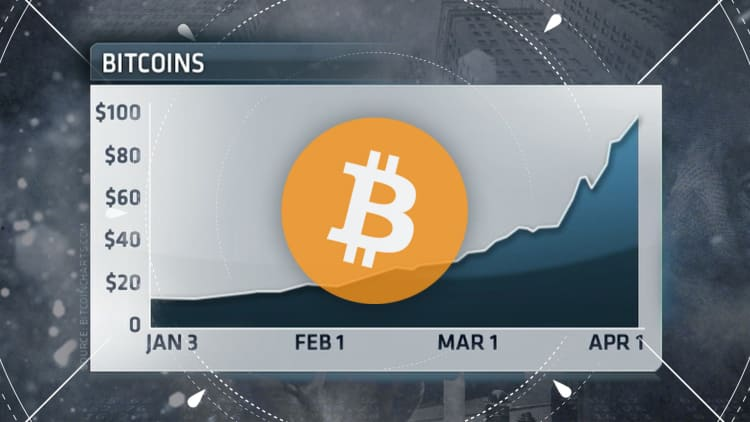
In early April 2013, Bitcoin crossed $100 for the first time. Then $150. Then, in the span of days, $266. It then crashed hard back to $50, only to rebuild itself. By November 2013, Bitcoin hit $1,000 on the Mt. Gox exchange.
I was watching from the sidelines, as I always was. Personal financial struggles meant I had no money to put in. I was not alone. Many early observers, people who had followed Bitcoin since the beginning, people who genuinely understood what they were watching, never bought a single coin. Not because they did not believe. Because the ordinary life has a way of keeping you on the ground.
The psychology of watching that 2013 run without participating is difficult to explain to anyone who was not there. It was not simple greed. It was the recognition that something genuinely historic was happening, and that for reasons entirely outside your control, you were experiencing it as a spectator.
The Crash, Mt. Gox, and the Year Bitcoin Felt Fragile
February 7, 2014: The Day the Movement Felt Real and Vulnerable
If 2013 was the year Bitcoin made believers, 2014 was the year it reminded everyone of what it still was: an experiment without a safety net.
Mt. Gox, the Tokyo-based exchange that had handled the majority of all Bitcoin transactions worldwide, suspended withdrawals on February 7, 2014. On February 24, the website went dark. Roughly 850,000 Bitcoin, belonging to customers and the company itself, were reported missing.
The price fell from above $800 in early 2014 to below $350 by the time the dust began to settle. For the community, it was something worse than a price drop. It was a crisis of confidence.
I watched the forums process that collapse in real time. There was anger, confusion, and fear. There were people who had lost everything they had trusted to that platform. And there were people who wrote, with quiet determination, that the network itself still stood. That the blockchain had not failed. That the idea had not died.
Those posts, the ones written in grief that still refused to give up, are the ones I think about most.
The Mt. Gox collapse is sometimes misremembered as Bitcoin's death. It was not. It was Bitcoin's adolescence. The painful, public, messy kind that leaves scars and teaches hard lessons.
Further Reading — The Human Cost
When the Archive Burned: The Impact of Mt. Gox on Early Bitcoin User Sentiment and Bitcoin Nostalgia →The full story of how the Mt. Gox collapse reshaped the emotional landscape of the early community, and why its shadow still falls across the culture to this day.
Related Archive — A Different Kind of Loss
Eight Thousand Bitcoin, One Mistake: The Story of James Howells and the Hard Drive He Can Never Get Back →For a deeper look at the era of catastrophic losses and what it meant for the culture, the story of James Howells captures another dimension of that same human weight.
From the Ashes: 2015 to 2017 and the Global Awakening
When Bitcoin Stopped Being a Secret
After the wreckage of 2014, Bitcoin rebuilt itself slowly. By mid-2015, the price was hovering under $300. The community that remained was smaller, more determined, and arguably more serious than it had been at the peak.
Then 2017 happened.
Bitcoin crossed $1,000 again in January of 2017 for the first time since 2013. Then it kept going. $5,000. $10,000. $15,000. By December 2017, it touched nearly $20,000.
The cultural shift was impossible to ignore. Bitcoin was no longer a cypherpunk secret, no longer a Reddit curiosity, no longer the subject of skeptical Wired articles. It was on the evening news. Your relatives were asking about it at Thanksgiving. Taxi drivers were discussing it.
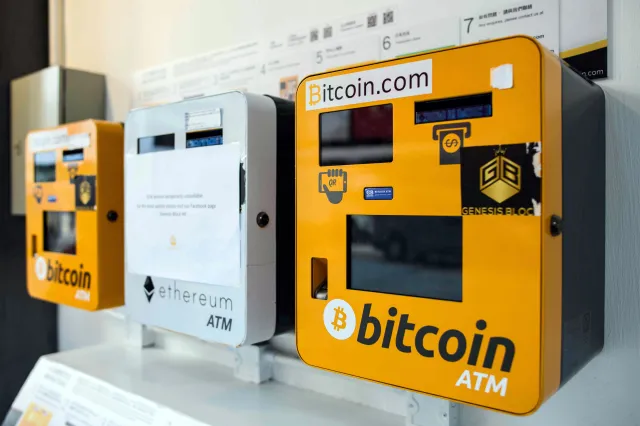
For those of us who had been watching since 2010, 2011, 2013, the feeling was impossible to describe in a single word. It was something between pride, vindication, and a deep, quiet sadness.
The thing we had witnessed being born, this strange, radical idea, had become something the whole world was suddenly chasing. And most of us who had been there from the beginning were still watching from the outside.
The Institutional Era and the Weight of $70,000
2020 to 2021: The Revolution Gets a Boardroom
The final act of this particular chapter arrived in 2020 and 2021. MicroStrategy began purchasing Bitcoin as a corporate treasury reserve. Tesla announced a $1.5 billion purchase. Institutional funds entered. Bitcoin crossed $60,000, then $69,000 in November 2021.
The conversation had changed entirely. The cypherpunks and early hobbyists who had debated the nature of money on IRC channels and forum threads were now sharing conceptual space with hedge fund managers and corporate treasurers.
I am not bitter about that. The idea deserved to survive. The idea was always bigger than any single community. But there is something worth preserving about what was lost in the translation from underground movement to mainstream asset.
The early days had a texture that the institutional era does not. It had humor, chaos, genuine idealism, spectacular failures, and people who believed in something without any financial incentive to do so. Those stories deserve to be remembered.
The Emotional Math That Never Quite Resolves
If you had purchased 1,000 Bitcoin in October 2009 for $1.00, you would have, at the 2021 peak, been holding approximately $69,000,000.
Most people who knew about Bitcoin in 2009 did not do this. Not because they were fools. Because they were human. Because $1.00 felt like a gamble on nothing. Because life was happening around them. Because the concept was too strange, too new, too uncertain.
The emotional weight of that math, the gulf between what was possible and what actually happened, is something that lives permanently in the community. It is not always spoken about directly. But it is always there.
Pillar Archive
The Psychology of Crypto Regret: Understanding Bitcoin Nostalgia, FOMO, and Missed Fortunes →If you want to understand why that feeling never quite goes away, the deeper psychological architecture of crypto regret and missed fortunes is explored in our main pillar archive.
What Would It Have Been Worth?
The math of missed opportunity is something the early Bitcoin community has lived with quietly for years. Below is a simple historical record — not a financial tool, not advice, just the arithmetic of memory. Enter a year and an amount, and see what the numbers say.
What Would It Have Been Worth?
Choose a year and enter a hypothetical amount. See what it would have been worth at each historical Bitcoin price peak.
Strictly historical data — no future projections.
Historical Value at Each Peak —
Based on documented historical price peaks. Exchange rates sourced from public blockchain data and archived exchange records.
Frequently Asked Questions
What was the price of Bitcoin when it first started trading?
The first known Bitcoin exchange rate, published by the New Liberty Standard in October 2009, was 1,309.03 BTC per $1.00 USD, placing the per-coin price at roughly $0.00076. By mid-2010, it had climbed to approximately $0.0008. These figures are documented in early Bitcointalk forum archives and are often cited when discussing the origins of early bitcoin adopter culture.
Why do so many people regret not buying Bitcoin in the early years?
The regret of not buying Bitcoin early is almost universally tied not to ignorance, but to circumstance. Many early observers understood what Bitcoin was conceptually. The barrier was almost never a lack of information. It was access to disposable income, uncertainty about the technology's survival, and the simple human difficulty of acting on something that no one around you believed in. Bitcoin price history sentiment among early followers reflects this complicated mix of recognition without participation.
Who were the early Bitcoin adopters and what drove them?
Early Bitcoin adopters were a loose coalition of cypherpunks, libertarian technologists, cryptography enthusiasts, and curious hobbyists who found the Satoshi Nakamoto white paper and the early Bitcointalk forums through tech blogs and niche internet communities. They were primarily driven by ideological interest in a decentralized currency rather than financial motivation. Many mined Bitcoin on home computers simply to participate in the network and test the idea.
What happened to the people who bought Bitcoin at the 2013 peak?
Those who purchased Bitcoin at or near the late 2013 peak of approximately $1,000 on exchanges like Mt. Gox faced an immediate and prolonged decline. The Mt. Gox collapse in early 2014, combined with general market contraction, pushed prices below $200 by early 2015. Those who held without selling and survived the years of low prices would eventually see significant appreciation, though the emotional and financial cost of that waiting period was substantial for many.
Is Bitcoin nostalgia only about financial regret?
No. Bitcoin nostalgia encompasses something much broader than missed financial opportunity. It covers the culture of the early forums, the idealism of the original movement, the technical debates, the memes, the characters, and the sense of participating in something historic before the rest of the world caught up. For many in the community, the financial dimension is secondary to the feeling of having witnessed something genuinely transformative in its raw, unpolished, pre-institutional form.
Keep These Stories Alive
If you were there in those early days, whether you mined your first block in 2010, watched the 2013 run from a forum thread, or simply felt that quiet electricity of recognizing something historic before the rest of the world did, these stories belong to you as much as they belong to anyone.
Bitcoin Nostalgia exists as a free archive. No sponsored tokens. No trading signals. No agenda beyond the simple, stubborn belief that the human side of this revolution is worth preserving before it fades entirely beneath the charts and the commentary.
If this archive has given you something, a memory recalled, a story preserved, a moment of recognition, consider helping keep it alive.
Keep This Archive Alive
Bitcoin Nostalgia runs on memory and community support. If this archive has ever brought back a moment, a name, or a feeling from those early days, help us keep it alive. Every sat keeps the archive running. Thank you for remembering with us.
bc1qu6v3m430v9ca0kxm3qk8cewcwukmfpf5rqakrj
From one nostalgic to another,
Angel
Disclaimer: This article is a historical and cultural archive. Nothing in this publication constitutes financial advice, investment guidance, or price speculation. Bitcoin Nostalgia is a memory archive, not a financial publication. All historical references are based on publicly available records, archived forum posts, and documented community history. Sources include the Bitcoin whitepaper, Bitcointalk.org archives, Mt. Gox Wikipedia entry, and the Wayback Machine.