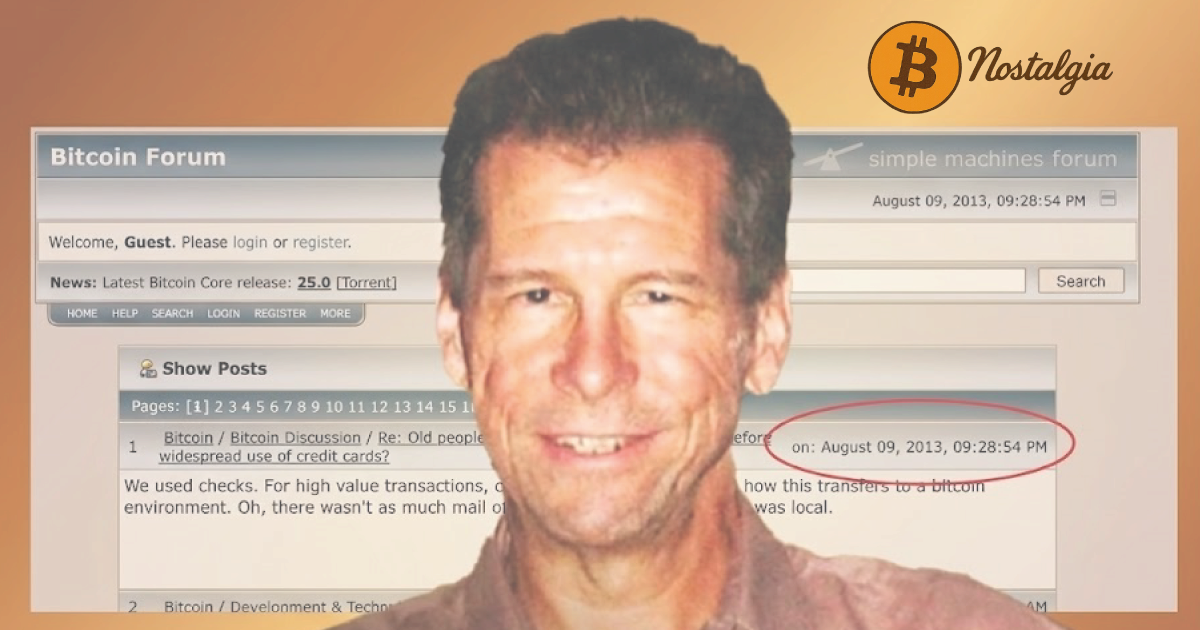
There is a specific kind of ache that does not have a clean medical name. It is not grief, exactly. It is not jealousy in the traditional sense. It lands somewhere quieter, somewhere between wonder and what if, and it visits people most often late at night when the old screenshots resurface on social media. For millions of people across the world, that ache has a very specific origin: a forum thread they stumbled across in the early 2010s, a moment they shrugged off as nothing serious, a moment the world later called the beginning of the Bitcoin revolution. This is the psychology of crypto regret. And at its core, it is a story not about money at all. It is a story about human nature, timing, and the cultural weight of bearing witness to history from the sidelines. Welcome to bitcoin nostalgia, where the most important currency has always been memory.
1. The Weight of What You Almost Did
Most people who feel the pull of bitcoin nostalgia did not miss Bitcoin because they were uninformed. They missed it because they were human.
They read about it. They discussed it. Some even downloaded a Bitcoin wallet, stared at the interface, and closed it. The friction was not ignorance. The friction was disbelief, and that distinction matters enormously.
Psychologists call this "near-miss regret," a particularly potent form of counterfactual thinking where the mind fixates not on what happened, but on how easily things could have gone differently.
Bitcoin activates this cognitive pattern at an almost unprecedented cultural scale. No other financial event in modern history has produced so many people who remember almost acting, and carry that memory quietly for years.
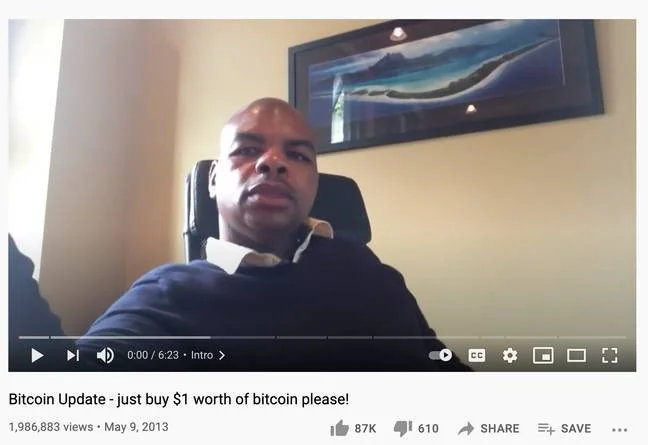
The weight of that almost is what defines the bitcoin nostalgia experience for an entire generation of early digital observers. It was not recklessness that kept them out. It was the very rational response of a mind that had not yet seen the future.
2. Bitcoin in 2010: A Price Nobody Believed In
To understand the regret, you have to understand just how unbelievable those early numbers looked at the time.
In early 2010, Bitcoin had essentially no established market price. The first known real-world commercial transaction, Laszlo Hanyecz's famous pizza purchase in May 2010, reportedly involved 10,000 BTC for a meal worth approximately $41, according to historical records preserved on Bitcointalk.org. That exchange rate placed a single Bitcoin at roughly $0.004.
That transaction was celebrated in the forums. It was thrilling. It proved Bitcoin could function as actual currency. But almost no one watching saw it as the beginning of something irreversible.
By the end of 2010, prices hovered around $0.30 per coin according to historical data logged by early Bitcoin market trackers. By 2011, it briefly touched $1, and then $30, before collapsing sharply back down in what would become the first widely discussed Bitcoin bear cycle.
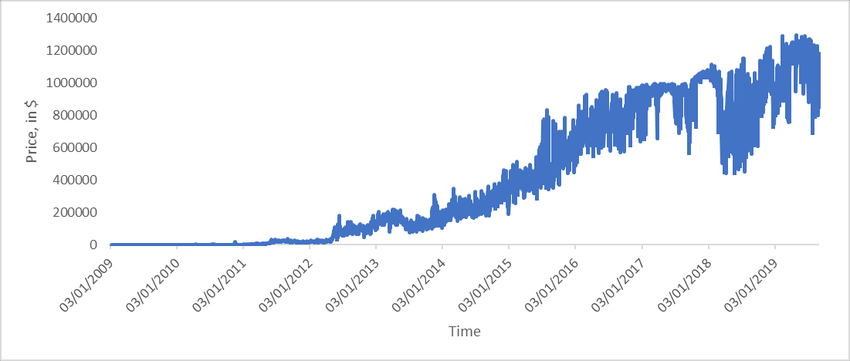
This was the bitcoin price history sentiment of that era: equal parts excitement and deep, instinctive skepticism. The idea of paying real money for something that lived only on a computer, backed by a person no one had ever verified, required a leap of faith most observers, myself included, were not yet ready to take.
And that hesitation was entirely rational at the time. That is the part the retrospective charts never show.
3. The Psychology of Missing Out: FOMO Before It Had a Name
The term FOMO, Fear of Missing Out, was not widely used in cultural conversation until around 2013. But the feeling itself was operating at full force in the Bitcoin forums as early as 2011.
I remember reading the Bitcointalk threads in those years, not as a participant but as a ghost in the machine, refreshing pages without an account, absorbing debates that felt equal parts visionary and absurd. The early adopters were not monolithic. They were libertarians, cypherpunks, programmers, and dreamers who argued constantly and passionately about what Bitcoin actually was.
Was it a currency? A commodity? A political statement? An experiment? All of these were live debates happening simultaneously in the forums while the outside world barely registered Bitcoin's existence.
The FOMO was not about wealth in those early days. It was about belonging. It was the slow, sinking sensation of watching a club form in real time and recognizing, dimly, that you were standing just outside the door.
That emotional texture is what bitcoin nostalgia preserves. Not just the price data, but the specific quality of the air inside those digital rooms.
3.1 The 2013 Bull Run: When the Sidelines Started to Hurt
Nostalgic MomentNostalgic Moment — 2013
If 2010 and 2011 were the years of curious detachment, then 2013 was the year detachment became painful. In early 2013, Bitcoin crossed $100 for the first time. By April, it had briefly touched $266 before a sharp correction. And then, in the final months of the year, it climbed past $1,000, a number that stopped being theoretical and started appearing in mainstream newspaper headlines.
I remember sitting in a small apartment in late 2013, watching those headlines roll across a news website with an unsettled feeling I could not fully name at the time. The debates I had been reading for three years had just graduated from the underground internet into prime-time television. The forums exploded. The Reddit threads multiplied overnight. New users flooded Bitcointalk who had never heard of Satoshi, never read the whitepaper, never experienced the quiet, strange excitement of those early years.
And there I was, still on the sidelines. Not because I lacked interest. Because I lacked the financial margin that would have made even a small entry feel safe. That is the version of this story that rarely gets told: the regret not buying Bitcoin felt by people for whom it was never simply a decision about belief, but a decision about survival budgets. The FOMO of 2013 was not abstract anymore. It had a dollar figure attached to it, and that figure kept growing.
Interactive Archive Tool
What Would Your Bitcoin Have Been Worth?
A historical context tool only. Not financial advice. All values shown are documented past milestones.
4. The Moment Curiosity Became Regret
Regret, as a psychological state, requires a specific ingredient: irreversibility.
You do not regret decisions while the outcome is still uncertain. Regret arrives later, after the window closes, after the numbers solidify into historical record, after the what if calcifies into the what was.
For the Bitcoin observer community, that irreversibility arrived in waves.
The first major wave came after the 2013 peak and the subsequent collapse of Mt. Gox in early 2014. Mt. Gox, once the dominant Bitcoin exchange handling the vast majority of global BTC transactions, filed for bankruptcy in February 2014 after reporting the loss of approximately 850,000 Bitcoin, according to court filings and widely archived reports of that period.
From the Archive
When the Archive Burned: The Impact of Mt. Gox on Early Bitcoin User Sentiment and Bitcoin Nostalgia →The full human story of February 2014: the forum panic, the silent website, and the community that refused to let the idea die.
For those on the sidelines, Mt. Gox felt, briefly, like vindication. The skepticism had been correct. The experiment had failed. And then Bitcoin did not fail. It recovered, slowly and stubbornly, and the regret timeline simply reset and extended forward.
The second wave arrived in 2017. The third in 2020 and 2021. Each cycle produced a new cohort of observers who remembered reading about Bitcoin earlier and looked away.
The psychology of this pattern is documented in behavioral economics literature under the concept of repeated counterfactual regret, where each new peak reactivates the original near-miss memory, compounding its emotional weight over time.
For the bitcoin nostalgia community, each cycle is not just a market event. It is a reopening of a very specific psychological file.
5. Why Bitcoin Nostalgia Is Bigger Than Missed Money
Here is what I have come to understand across years of sitting with this history: the deepest layer of bitcoin nostalgia was never really about the money.
It was about being present at the creation of something genuinely new, and not fully knowing it at the time.
Human beings have a complicated relationship with historical witnessing. We are wired, in part, to discount the future and trust the familiar. In 2010, Bitcoin asked observers to extend enormous trust in something invisible, decentralized, and authored by someone who would vanish entirely from public view by 2011.
Satoshi Nakamoto, whoever they were, stepped away from the Bitcointalk forums in April 2011, leaving behind a protocol and whitepaper, a community, and a mystery that has never been publicly resolved. That disappearance is itself one of the most compelling archival stories in the history of digital culture.
Bitcoin nostalgia is not about loss. It is about witness. It is about making sure that the human story of Bitcoin's origin does not get filed away behind price charts and forgotten entirely.
When I sit with these memories now, what strikes me most is not the scale of the loss. It is the fact that the forums kept going. The threads kept running. The nodes kept validating. Something about that quiet persistence, that refusal to let the idea die, is the purest expression of what the early Bitcoin community actually was.
The archived Bitcointalk threads, some of which still exist through the Wayback Machine and Bitcointalk's own archive, read like a time capsule. Somewhere in those exchanges is the emotional DNA of everything the Bitcoin community became afterward.
The grief of bitcoin nostalgia, at its truest level, is the grief of the witness who recognized a revolution and could not act on it. Not because they were foolish. But because life rarely provides clean, consequence-free windows for leaping into the unknown.
To understand this is to understand Bitcoin's cultural legacy more completely than any price chart can convey.
Further Reading
Bitcoin Nostalgia: A Timeline of Iconic Events and Milestones That Shaped Crypto History →For a full record of the events and milestones that shaped this era, from the genesis block to the institutional era, this timeline archive holds the complete picture. Every date, every forum panic, every breakthrough, preserved as it actually felt.
The story of Bitcoin is the story of a thousand different kinds of observers, each one carrying their own version of what the early days felt like. And every one of those stories deserves to be preserved.
Frequently Asked Questions
These questions represent the most common threads of curiosity this archive receives from readers across the world.
What does "bitcoin nostalgia" actually mean?
Bitcoin nostalgia refers to the emotional and cultural longing connected to Bitcoin's earliest years, roughly 2009 to 2013, when the community was small, the forums were raw and unfiltered, and the future of the technology was genuinely uncertain. It encompasses both the fond memory of witnessing something new and the bittersweet awareness of opportunities that passed without being acted upon.
Why do so many people feel regret about not buying bitcoin early?
The psychology of regret not buying bitcoin is rooted in counterfactual thinking, the human tendency to replay decisions with the benefit of hindsight. Bitcoin's price history created one of the most extreme examples of this in modern economic culture, with early prices in fractions of a cent eventually scaling to tens of thousands of dollars per coin across multiple market cycles. Each new peak reactivates the original near-miss memory.
What was the Bitcoin price in 2010, and why does it matter culturally?
In 2010, Bitcoin had no reliable market price for most of the year. The first documented commercial transaction in May 2010 (Bitcoin Pizza Day) placed value at roughly 10,000 BTC for two pizzas worth approximately $41 at the time. By late 2010, prices were recorded near $0.30 per coin by early market trackers. These figures matter culturally because they represent the gap between what was visible then and what became true later, the exact gap where nostalgia and regret are born.
Was the early Bitcoin community aware it was making history?
Partially. The cypherpunk community and early developers understood they were building something ideologically significant. But the broader base of forum observers, hobbyists, and casual readers often engaged with Bitcoin as a fascinating intellectual experiment rather than a world-changing financial instrument. The full cultural weight of those early years became clear almost entirely in retrospect.
Is bitcoin nostalgia just about financial regret?
No. While the financial dimension is real and widely discussed, bitcoin nostalgia also captures the cultural loss of the early internet era of Bitcoin: the raw, unpolished forum debates, the anonymity, the genuine idealism, and the sense of a small, strange community building something quietly in the dark. Many in the community mourn the culture and the human stories as much as any missed price entry point.
Help Keep This Archive Alive
If any part of this story resonates with you, if you lived those early forum days, mined your first coins on a laptop that ran too hot, or simply stood on the sidelines like I did and watched it all unfold, then you already understand why this archive matters.
These stories do not belong to the price charts. They belong to the people who were there, and to the people who want to understand what those years actually felt like from the inside.
If you believe this kind of cultural memory is worth preserving, consider supporting the Bitcoin Nostalgia archive. Every contribution helps keep these stories alive for the next generation of digital historians.
Support Bitcoin Nostalgia
Bitcoin Nostalgia runs on memory and community support. If this archive has ever brought back a moment, a name, or a feeling from those early days, help us keep it alive. Every sat keeps the archive running. Thank you for remembering with us.
bc1qu6v3m430v9ca0kxm3qk8cewcwukmfpf5rqakrj
Keep the memory alive. — Angel, Founder & Chief Archivist, Bitcoin Nostalgia
Disclaimer: This article is a historical and cultural archive. Nothing in this publication constitutes financial advice, investment guidance, or price speculation. Bitcoin Nostalgia is a memory archive, not a financial publication. All historical references are based on publicly available records, archived forum posts, and documented community history. Sources include archived Bitcointalk threads, the Bitcoin Wikipedia record, the Wayback Machine, and the original Bitcoin whitepaper by Satoshi Nakamoto.