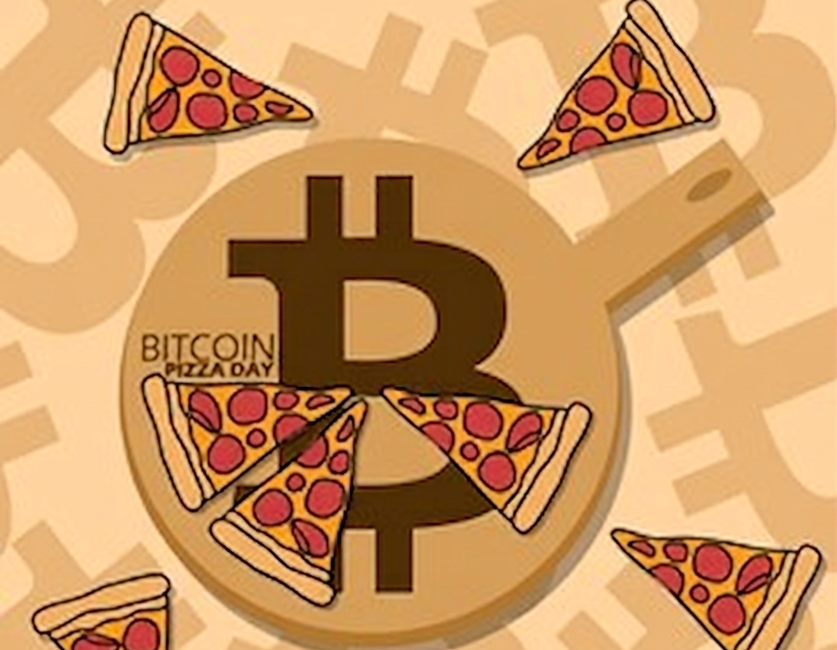
May 22, 2010. Somewhere in Jacksonville, Florida, two pizzas arrived at a front door.
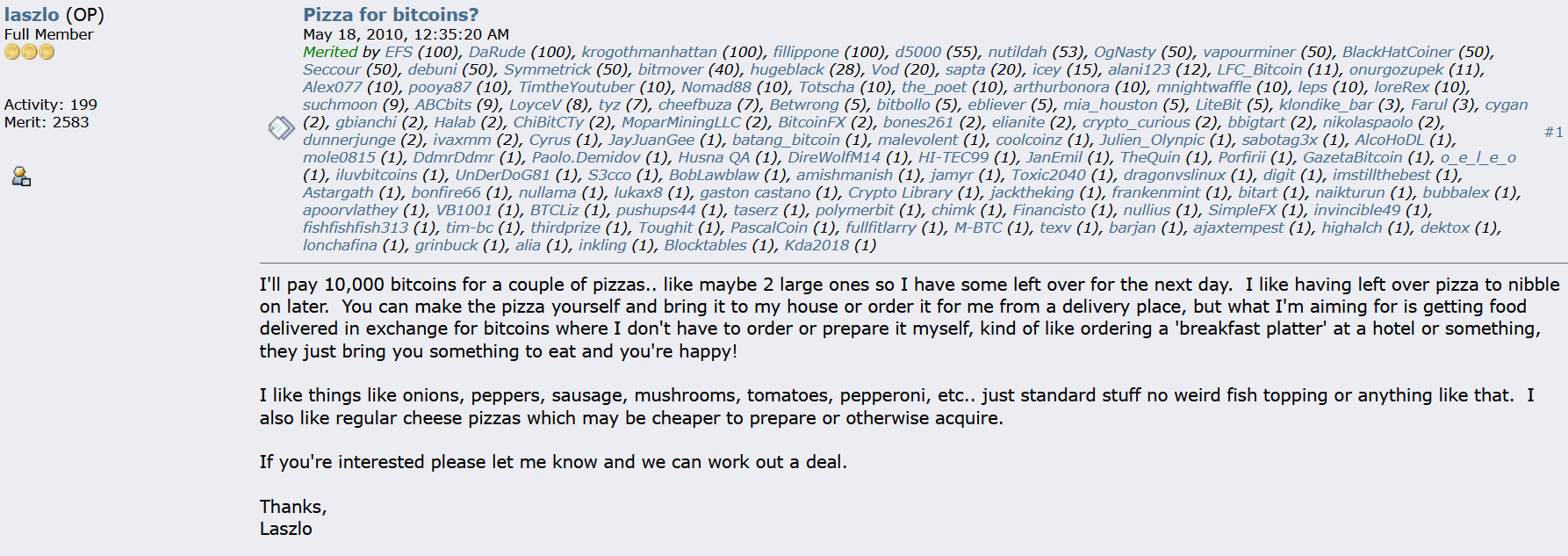
They were ordinary pizzas. The kind you order on a slow Tuesday when nothing else feels worth the effort. But the way they were paid for was anything but ordinary. A programmer named Laszlo Hanyecz had just completed what historians would later call the first documented commercial transaction using Bitcoin. The price? Ten thousand BTC.
At the time, nobody was sure whether that number meant anything at all.
I was not in that room. I was not on Bitcointalk watching the thread unfold in real time. But over the years, I have read every archived post, every reply, every breathless comment from the small cluster of people who witnessed it. And what strikes me now, looking back across more than a decade of bitcoin nostalgia, is not what was spent. It is what that moment quietly announced to the world: that an idea born in a whitepaper could reach out and touch something real.
This is the story of how Bitcoin went from a pizza purchase to a pillar of global financial culture. Told not through charts, but through the human moments that made it matter.
1. The Pizza That Started It All: Bitcoin Finds Its First Value
Before May 22, 2010, Bitcoin had no established exchange rate. It had no market. It was a concept shared between cryptographers, libertarian coders, and a handful of curious early adopters who passed it around like a puzzle no one expected to become a treasure.
Laszlo Hanyecz changed that. He posted on the Bitcointalk forum asking if anyone would order him a pizza in exchange for ten thousand Bitcoin. A fellow forum user in Britain, Jeremy Sturdivant, known online as jercos, took him up on it. He ordered from Papa John's in Florida and arranged the delivery.
The transaction was not elegant. It was not instant. It required trust between two strangers on the early internet, a phone call, and a delivery driver who had no idea he was part of history.
Hanyecz later said he wanted to prove Bitcoin could function as actual money. He succeeded. That pizza was proof of concept, a quiet milestone that the small Bitcoin community marked not with fanfare, but with genuine excitement. The replies in that thread read like people watching a spacecraft launch from a backyard.
Related Archive
Remembering the Pizza: A Bitcoin Nostalgia Look Back at the First Commercial Transaction →Today, May 22 is observed annually as Bitcoin Pizza Day. Read the full archive of that moment and its lasting cultural legacy.
2. From Forums to Reality: How Early Adopters Shaped Bitcoin's Identity
The months that followed the pizza transaction were formative in ways that are easy to underestimate now. Bitcoin was still operating almost entirely through community trust. There were no regulated exchanges, no smartphone apps, no corporate custodians.
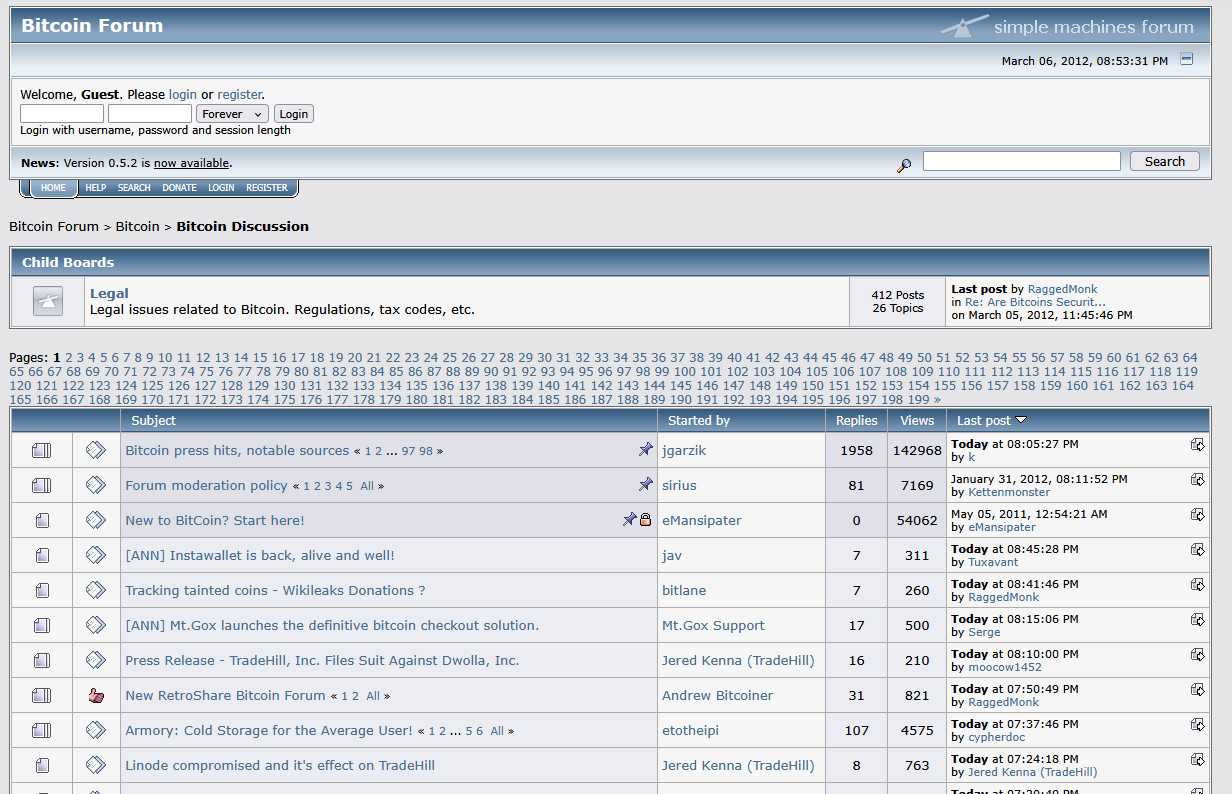
What there was, instead, was Bitcointalk.
The Forum as the Foundation
Founded by Satoshi Nakamoto himself, Bitcointalk was the beating heart of the early Bitcoin world. It was where developers debated code. Where miners traded tips. Where true believers argued philosophy and skeptics asked hard questions. It felt less like a financial platform and more like a late-night dorm room conversation that never quite ended.
I spent long evenings scrolling through those threads in 2010 and 2011. I never posted. I was what the internet calls a lurker. But I read everything. And what I kept noticing was this: the people there were not primarily talking about wealth. They were talking about freedom, about a system that could not be controlled, inflated away, or confiscated.
The real-world value of Bitcoin, in those early days, was not measured in dollars. It was measured in what it represented: a transaction that required no middleman. A currency that existed between two people and no one else.
The First Exchanges and the Chaos They Brought
By mid-2010, Bitcoin Market and then Mt. Gox had entered the picture. Suddenly there were prices. There were trades. There were numbers on a screen that shifted daily, sometimes hourly.
And with prices came a different kind of energy. One that was electric, chaotic, and, looking back, entirely unpredictable.
Mt. Gox, originally a trading card website repurposed into a Bitcoin exchange, would eventually handle over seventy percent of all Bitcoin transactions worldwide. It was where most people in the early community made their first trade. And it was also, as history recorded painfully in 2014, where the dream felt most fragile. But that story belongs to its own chapter.
3. The Silk Road Era: Controversy, Culture, and a Test of Ideas
Any honest account of Bitcoin's evolution into real-world value must acknowledge a chapter that made many people deeply uncomfortable: the rise of Silk Road.
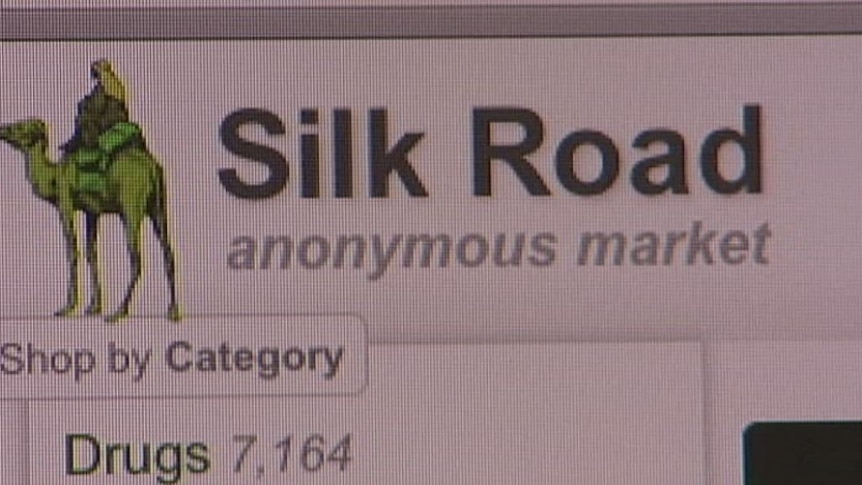
Launched in February 2011 by a figure known as Dread Pirate Roberts, later identified as Ross Ulbricht, Silk Road became the first major dark net marketplace. It used Bitcoin as its exclusive currency. For a brief and controversial period, it was the most prominent real-world application of Bitcoin that existed outside of direct peer-to-peer exchanges.
The mainstream media latched on. Senators called for Bitcoin to be banned. Headlines described it as drug money, untraceable and dangerous.
What the headlines missed, and what the Bitcoin community wrestled with openly on forums, was a philosophical question that cut to the core of the cypherpunk movement: Was this what peer-to-peer, censorship-resistant currency was always going to be used for? Or was this simply one use case among thousands that had not yet been discovered?
The shutdown of Silk Road by the FBI in October 2013 was a defining moment. It proved that Bitcoin's underlying blockchain was not as anonymous as many had assumed. It also proved that Bitcoin survived the controversy entirely intact. The protocol did not break. The community did not scatter.
That resilience was, in its own strange way, part of what gave Bitcoin legitimacy.
Deep Dive Archive
Remembering Silk Road: The Dark Side of Early Bitcoin Adoption and the Legend of Dread Pirate Roberts →For the full story of how Silk Road shaped Bitcoin's reputation and tested the limits of the cypherpunk ideal, read our dedicated archive.
4. 2013: The Year Bitcoin Became Impossible to Ignore
By October 2013, something had shifted that no one in the early community could fully explain in real time.
Bitcoin crossed one hundred dollars. Then two hundred. By November, it briefly passed one thousand dollars for the first time. The mainstream financial press descended. Cable news hosts struggled to explain what a blockchain was. Reddit threads crashed under the weight of new accounts.
I remember the feeling from my own vantage point on the sidelines: a combination of awe, disbelief, and something I can only describe as mourning. Not because I had missed wealth, though I had, but because the quiet, intimate community I had been observing for years was suddenly flooded with people who had never heard of Satoshi, who did not know what a node was, who could not name a single cypherpunk pioneer.
But there was also something beautiful happening. Bitcoin's real-world value was no longer theoretical. It was being tested across borders. Early adopters in Cyprus, facing a banking crisis, had used Bitcoin to move money when the traditional system froze their accounts. Venezuelan families would later do the same. Remittance workers in Southeast Asia discovered they could send money home without losing thirty percent in fees.
The pizza was a proof of concept. The 2013 bull run was the proof of relevance.
Pillar Archive
A Timeline of Bitcoin Nostalgia: The Iconic Events and Milestones That Shaped Crypto History →For a complete chronological record of these pivotal moments, visit our main archive covering every defining chapter of Bitcoin's cultural history.
5. The Evolution in Seven Milestones
The journey from pizza to prosperity was not a single leap. It happened in stages, each one quiet at the time, thunderous in retrospect. Here are seven milestones that trace the arc.
-
1
The Pizza Transaction (May 2010)
The first documented real-world purchase. Two pizzas. Ten thousand BTC. The moment Bitcoin proved it could function as actual money between real people. Read the full archive →
-
2
The First Exchange Rate (October 2009 to Early 2010)
The New Liberty Standard established the first informal Bitcoin exchange rate, calculating value based on the cost of electricity used to mine it. A single dollar was worth approximately 1,309 Bitcoin. Numbers that feel surreal now felt like science fiction then.
-
3
Bitcoin Reaches Parity with the Dollar (February 2011)
For the first time, one Bitcoin was worth one US dollar. On Bitcointalk, the community marked the moment with quiet celebration. It was not a guarantee of anything. It was simply a signal that the experiment had not failed.
-
4
The Silk Road Launch and Closure (2011 to 2013)
Controversial, uncomfortable, and unavoidable in any honest history. Silk Road stress-tested Bitcoin's resilience and its reputation simultaneously. The protocol survived both. Read the full story →
-
5
The Mt. Gox Collapse (February 2014)
Eight hundred fifty thousand Bitcoin, gone. The collapse of Mt. Gox shattered confidence and made international headlines for months. And yet Bitcoin endured. The community did not fold. A new, more cautious infrastructure began to be built from the wreckage. Read the full impact story →
-
6
The Lightning Network and Scaling Debates (2015 to 2017)
Inside the community, a fierce technical and philosophical debate broke out over how Bitcoin should scale. The blocksize wars, as they became known, revealed how deeply people cared about what Bitcoin was for and who it should serve. The arguments were public, often bitter, and entirely human.
-
7
Institutional Adoption (2020 to 2021)
MicroStrategy, Square, Tesla. El Salvador making Bitcoin legal tender. BlackRock filing for a Bitcoin ETF. The revolution that began in a cypherpunk mailing list had reached the boardrooms of the institutions the cypherpunks had always distrusted most. The irony was not lost on anyone who had been paying attention.
Frequently Asked Questions
What was the historical significance of the Bitcoin pizza transaction?
The Bitcoin pizza purchase on May 22, 2010, was the first documented instance of Bitcoin being used to purchase a physical good. It established that Bitcoin could function as real-world currency and is annually commemorated as Bitcoin Pizza Day by the global Bitcoin community.
How did Bitcoin develop real-world value in its early years?
Bitcoin's real-world value developed gradually through forum-driven community trust, early exchange platforms like Mt. Gox, peer-to-peer transactions, and highly publicized events that brought mainstream attention. Each milestone tested and ultimately reinforced the protocol's durability.
What was Mt. Gox and why does it matter in Bitcoin history?
Mt. Gox was a Tokyo-based Bitcoin exchange that at its peak handled the majority of all global Bitcoin transactions. Its collapse in February 2014, following the loss of approximately 850,000 Bitcoin, remains one of the most significant and studied events in cryptocurrency history. Read our full Mt. Gox archive →
Who were the cypherpunks, and what did they have to do with Bitcoin?
The cypherpunk movement was a group of privacy activists and cryptographers, active primarily through the 1980s and 1990s, who believed that strong cryptography was essential to individual freedom. Satoshi Nakamoto, Bitcoin's pseudonymous creator, drew heavily on cypherpunk ideas about decentralization and trustless systems.
Why do people feel nostalgic about early Bitcoin culture?
Early Bitcoin culture was defined by a small, idealistic community united around a shared idea rather than financial gain. The forums, the debates, and the human connections of that era feel remote today. For many who were present, whether as participants or silent observers, that period carries a weight that modern cryptocurrency culture does not fully replicate.
Help Keep This Memory Alive
These stories do not preserve themselves.
Every archived forum thread, every recovered screenshot, every human account of what it felt like to watch Bitcoin emerge from obscurity deserves to be kept somewhere safe. That is what this archive is for.
If the early days of Bitcoin mean something to you, whether you were there or you simply wish you had been, consider supporting the work of preserving these memories.
Keep This Archive Alive
Bitcoin Nostalgia runs on memory and community support. Every satoshi helps keep the archive running and the stories alive. Thank you for reading. Thank you for remembering.
bc1qu6v3m430v9ca0kxm3qk8cewcwukmfpf5rqakrj
Keep the memory alive.
Angel
Founder & Chief Archivist, Bitcoin Nostalgia
bitcoinnostalgia.org
Disclaimer: This article is a historical and cultural archive. Nothing in this publication constitutes financial advice, investment guidance, or price speculation. Bitcoin Nostalgia is a memory archive, not a financial publication. All historical references are based on publicly available records, archived forum posts, and documented community history. Sources include the Bitcoin whitepaper, Bitcointalk.org archives, the Bitcoin Wikipedia entry, and the Wayback Machine.