
January 12, 2009. Most people were going about their lives. The news cycle churned. The world was still reeling from the 2008 financial crisis, and nobody outside a tiny circle of cryptographers was paying attention to a small experiment running quietly on a few connected computers. On that day, a pseudonymous developer named Satoshi Nakamoto sent 10 bitcoins to Hal Finney, a cypherpunk, a programmer, and one of the most respected voices in digital privacy. It was the first real Bitcoin transaction in history. And almost nobody noticed.
That is exactly the kind of moment that gets swallowed by time. The price charts came later. The headlines came later. The billionaires came much, much later. But this, a simple transfer of ten coins between two men who believed in something bigger than themselves, this is where bitcoin nostalgia actually begins.
I was not there in 2009. I was piecing together the story years later through archived forum posts, Hal's blog entries, and the kind of late-night internet rabbit holes that only make sense when you are chasing something you cannot quite name. What I found moved me. And I have been trying to preserve it ever since.
A Network of Two: The Morning the Blockchain Came Alive
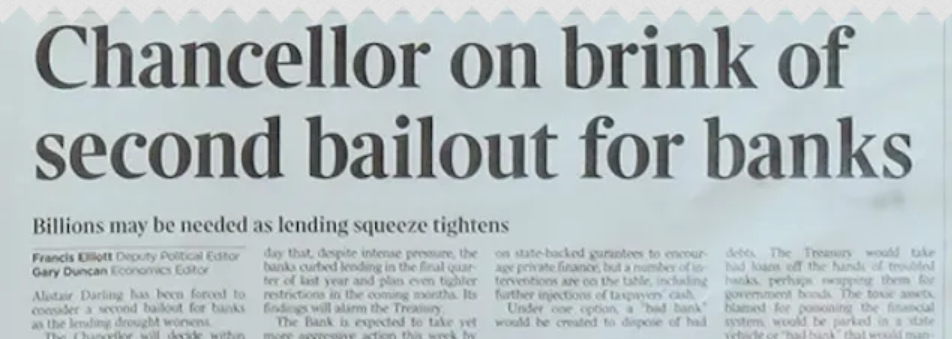
Bitcoin had technically existed for three days when that first transaction happened. Satoshi had mined the genesis block on January 3, 2009, embedding a famous headline from The Times into the coinbase data as a timestamp and a quiet message: "Chancellor on brink of second bailout for banks."
But a blockchain with one participant is not a network. It is a monologue. It needed at least one other voice.
That voice was Hal Finney.
Who Was Hal Finney?
Nostalgic MomentHal Finney was not a casual observer. He was a legend in the cypherpunk community long before Bitcoin existed. He had worked on PGP encryption at a time when strong cryptography was still treated as a potential weapon by governments. He understood what digital privacy meant at a fundamental level.
When Satoshi published the Bitcoin whitepaper to a cryptography mailing list in October 2008, most recipients were skeptical. The history of failed digital cash systems, from DigiCash to e-gold, was long and painful. Hal Finney was one of the few who responded with genuine curiosity and engagement.
He ran the Bitcoin software almost from day one. He was, as far as the public record shows, the second node on the entire network.
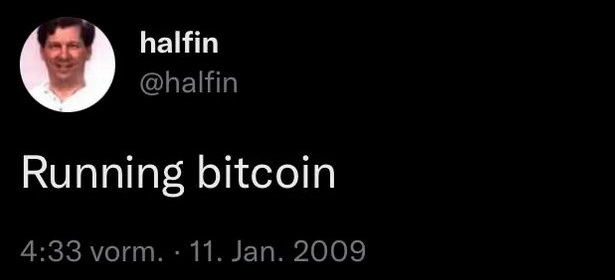
On January 11, 2009, Hal tweeted something that reads like a relic from a different universe now. He posted: "Running bitcoin." Two words. Hundreds of billions of dollars in market capitalization would eventually rest, in part, on that casual announcement.
Block 170: The Transaction That Made Bitcoin Real
On January 12, 2009, the transaction was confirmed in Block 170 of the Bitcoin blockchain. Satoshi sent 10 BTC to Hal Finney. That is the entire event, technically speaking. A transfer. A confirmation. A record on a distributed ledger.
But context transforms facts into stories.
Think about what those 10 coins represented in that moment. They had no exchange rate. There was no price to quote, no market to check, no wallet app to download. They were proof of concept. They were an act of trust between two people who believed that a borderless, decentralized currency could one day exist.
Hal later wrote about that period with characteristic warmth. He described early Bitcoin as "quiet." He talked about it with the tone of someone who had seen something extraordinary and was still processing it, even years later.
Hal Finney, via archived posts on Bitcointalk.org
What the Record Shows
The transaction is verifiable to this day. Block 170 is publicly visible on the blockchain. Anyone can look it up. The coins moved from Satoshi's address to Hal's address. That immutability, the fact that this tiny historical moment is permanently encoded and cannot be altered or erased, is one of the most poetic things about Bitcoin for those of us who care about preservation.
I have spent time staring at that block explorer page more than I would like to admit. There is something about seeing the raw data that makes the history feel tangible. It is not a story in a book. It is a live record. And it will be there long after all of us are gone.
The Human Story Behind the Code
What makes this moment so resonant for anyone who followed the early days of Bitcoin is not the transaction itself. It is the two people on either end of it.
Satoshi Nakamoto remains one of the greatest unsolved mysteries of the internet age. The identity behind that name is still unknown. What we do know is that Satoshi was brilliant, disciplined, and deeply ideologically committed. The design of Bitcoin reflects years of careful thinking about cryptography, game theory, and the nature of money itself.
And then, in 2010, Satoshi quietly stepped away. The last verified communication from Satoshi was in April 2011. The creator of Bitcoin disappeared as deliberately as they had arrived. You can read the full thread of Satoshi's final known messages on the archived Bitcointalk thread.
Hal Finney's Final Chapter
Hal Finney's story does not end in 2009. He remained engaged with the early Bitcoin community for years. He continued to write, to think, and to contribute, even as his health declined.
In 2009, Hal was diagnosed with ALS, amyotrophic lateral sclerosis. He continued working for as long as he physically could. He wrote about his illness with the same clarity and openness he brought to everything else. He talked about Bitcoin. He talked about what he hoped it could become.
Hal Finney passed away on August 28, 2014. His wife Fran honored his wishes and he was cryonically preserved by the Alcor Life Extension Foundation. That detail, a man who believed so deeply in the future that he made arrangements for it, has always struck me as deeply fitting for someone who helped birth a technology that millions of people now rely on.
The original bitcoin community mourned him the way you mourn someone who made the world feel more possible.
Why This Moment Still Matters
I have been asked more than once why I spend so much time writing about the past when the present is so loud and the future so uncertain. The honest answer is that I think we lose something important when we forget where things started.
The story of Bitcoin in popular culture has become a story about price. About millionaires and early adopters and missed opportunities. I understand that narrative. I lived on the sideline of it, watching it unfold without a way in, and I feel that particular ache of what might have been.
But that is not the whole story. That is barely even the beginning of the story.
The beginning of the story is two people. A mystery and a believer. A cypherpunk and an idealist. A network of two computers running an experiment that had no guaranteed future.
The first bitcoin transaction was not a financial event. It was a leap of faith.
And that, more than any price milestone, is worth remembering.
Further Reading
A Timeline of Bitcoin Nostalgia: The Iconic Events and Milestones That Shaped Crypto History →If you want to follow the full arc of how that leap of faith grew into a cultural movement, explore the complete Bitcoin Nostalgia Timeline. It traces every defining moment from the genesis block to the institutional era.
Related Archive
Remembering Silk Road: The Dark Side of Early Bitcoin Adoption and the Legend of Dread Pirate Roberts →The archive on Silk Road and the legend of the Dread Pirate Roberts is essential reading. No story of early Bitcoin is complete without its darkest chapters.
Related Archive
Remembering the Pizza: A Bitcoin Nostalgia Look Back at the First Commercial Transaction →If this transaction sparked your curiosity about how Bitcoin first entered the real world economy, the story of the Bitcoin pizza and the first commercial transaction picks up exactly where this one leaves off.
Frequently Asked Questions
When did the first Bitcoin transaction take place?
The first Bitcoin transaction between two people took place on January 12, 2009. Satoshi Nakamoto sent 10 BTC to Hal Finney. It was confirmed in Block 170 of the Bitcoin blockchain and remains publicly visible to this day.
Who was Hal Finney and why does he matter to Bitcoin history?
Hal Finney was a cypherpunk and cryptographer who had contributed to PGP encryption before Bitcoin existed. He was one of the earliest Bitcoin users, ran the second node on the network, and was the recipient of the very first transaction. He remained an engaged member of the early Bitcoin community until his passing in 2014. His legacy is inseparable from the origins of Bitcoin.
Has Satoshi Nakamoto ever been identified?
No. Despite years of speculation, investigative journalism, and multiple people claiming or being accused of being Satoshi, the true identity behind the pseudonym remains unconfirmed. Satoshi's last known communication with the early Bitcoin community was in April 2011. The mystery remains one of the defining elements of Bitcoin's cultural history. The Wikipedia entry on Satoshi Nakamoto tracks the public record of claims and investigations to date.
What were the early bitcoin adopters actually like?
The original bitcoin community was a small, decentralized group of cryptographers, cypherpunks, libertarians, and tech enthusiasts. They communicated through Bitcointalk forums, mailing lists, and IRC channels. Most were motivated by ideology rather than financial gain. They believed in the concept of a decentralized currency long before it had any real monetary value. The community was scrappy, idealistic, and nothing like the financial world Bitcoin would later collide with.
What was Bitcoin like in the beginning?
In 2009 and 2010, Bitcoin was an experiment running on a handful of computers. There was no exchange rate, no wallet apps, and no mainstream coverage. Mining happened on ordinary CPUs in dorm rooms and home offices. The community was tiny, communicating in forum threads and mailing lists. It felt like an underground project, more internet culture than financial product. That is precisely why so many early participants remember it with such deep nostalgia. The Wayback Machine archive of early bitcoin.org offers a rare window into that original era.
Help Keep This Memory Alive
If the first transaction between Satoshi and Hal moved something in you, if these stories feel worth preserving, consider supporting this memory archive with a small Bitcoin donation. Every satoshi goes toward keeping Bitcoin Nostalgia alive, online, and free, so the culture of the early days is never lost to price charts and market noise.
Keep This Archive Alive
Bitcoin Nostalgia runs on memory and community support. If this archive has ever brought back a moment, a name, or a feeling from those early days, help us keep it alive. Every sat keeps the archive running. Thank you for remembering with us.
bc1qu6v3m430v9ca0kxm3qk8cewcwukmfpf5rqakrj
The beginning of the story is two people. A mystery and a believer. A cypherpunk and an idealist. A network of two computers running an experiment that had no guaranteed future. The first bitcoin transaction was not a financial event. It was a leap of faith. And that, more than any price milestone, is worth remembering.
Keep the memory alive. — Angel, Founder & Chief Archivist, Bitcoin Nostalgia
Disclaimer: This article is a historical and cultural archive. Nothing in this publication constitutes financial advice, investment guidance, or price speculation. Bitcoin Nostalgia is a memory archive, not a financial publication. All historical references are based on publicly available records, archived forum posts, and documented community history. Sources include the Bitcoin whitepaper, archived Bitcointalk posts by Hal Finney, Block 170 on Blockstream Explorer, Hal Finney's Wikipedia entry, and the Wayback Machine.