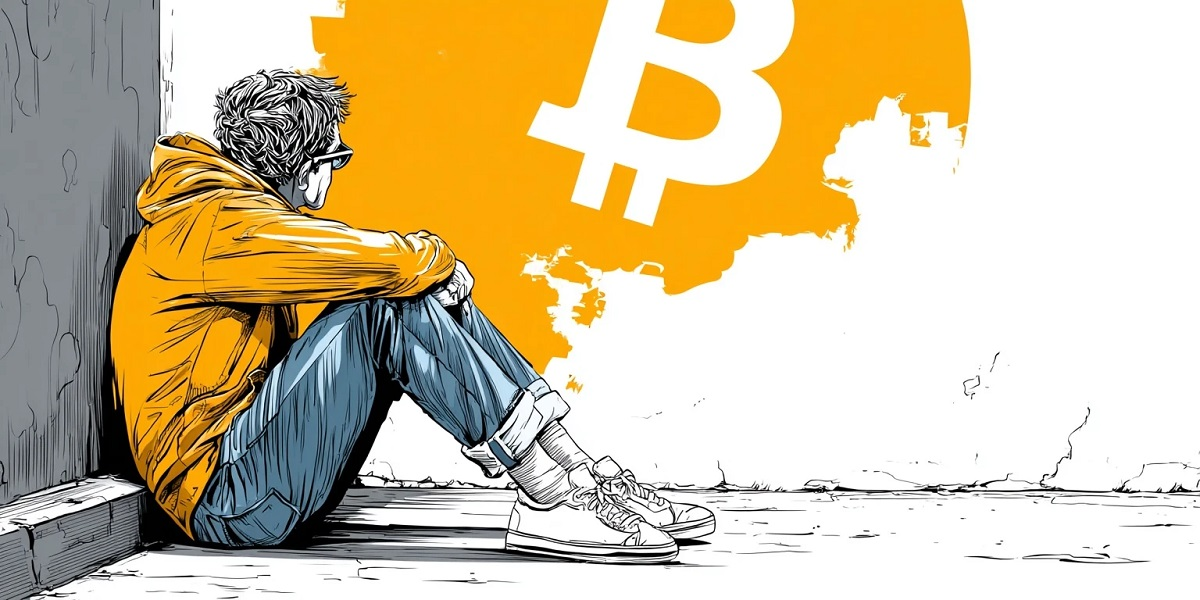
Most of Bitcoin’s history has been flattened into price charts.
The human beings behind the genesis block, the first nodes, the first transactions — they are reduced to footnotes, trivia answers, and Wikipedia entries.
But some stories refuse to be reduced. Some stories carry a weight that charts cannot measure.
Hal Finney’s last post on Bitcointalk is one of those stories.
Written in 2013 as his body was failing him, it was not a price target or a manifesto. It was something quieter and far more lasting: a final letter from the first Bitcoin user to the community he had helped build. A message of calm dignity from a man who understood, perhaps better than anyone, what he had helped set in motion.
If you are here for bitcoin nostalgia, this is where it should begin. Not with Satoshi’s whitepaper, not with the first exchange, but with the human being who caught the first transaction and never stopped believing in what it meant.
Who Was Hal Finney? The Man Before the Legend
Before there was a Bitcoin community, there was a network of cryptographers, coders, and dreamers communicating through email lists and early forums.
Hal Finney was among the most respected voices in that world. A software engineer at PGP Corporation, he had been contributing to cryptographic systems since the early 1990s. He was not a hobbyist. He was a craftsman.
In the cypherpunk mailing lists of the 1990s, Finney was a steady, thoughtful presence. While others debated the theoretical possibility of digital cash, Finney was thinking through the practical engineering of it.
The Morning of January 12, 2009
When Satoshi Nakamoto published the Bitcoin whitepaper in October 2008, most of the cypherpunk community read it with polite skepticism. It had been tried before. These things tended not to work.
Hal Finney downloaded the software and ran it.
On January 12, 2009, Satoshi sent him 10 bitcoin in what became the very first peer-to-peer Bitcoin transaction in recorded history. Block 170. A number that now belongs permanently to the archive.
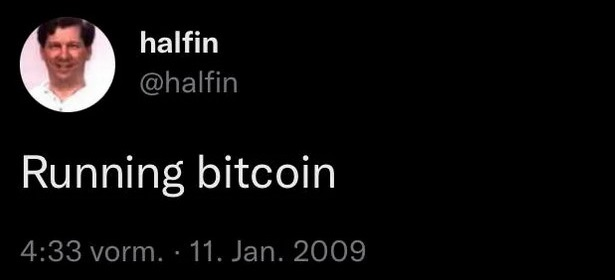
His message that day, posted on X (then Twitter), was three words: “Running bitcoin.”
No exclamation mark. No hype. Just a quiet confirmation that the experiment was alive.
The Diagnosis That Changed Everything
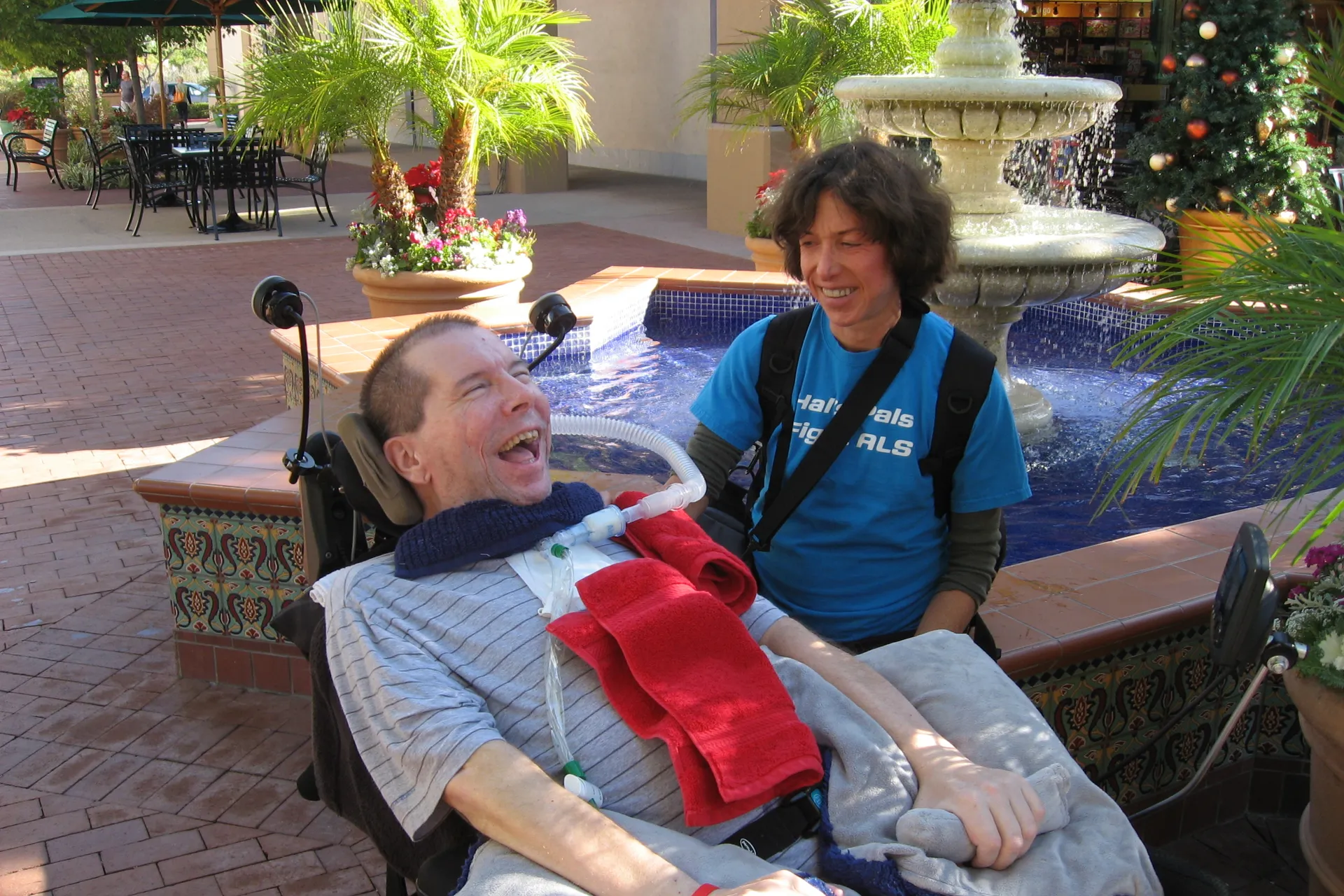
In 2009, the same year Bitcoin launched, Hal Finney began to notice something wrong with his body.
By 2011, he had a diagnosis: ALS. Amyotrophic lateral sclerosis. A disease that would progressively take away his ability to move, speak, and ultimately breathe independently. There is no cure.
For most people, a terminal diagnosis means stepping away from professional and creative life. For Finney, it meant something different.
He kept coding.
In a forum post, he described writing Bitcoin code from a wheelchair, his eyes guiding the cursor through an eye-tracking device. He called it “a strange experience.” He did not call it a tragedy.
That quiet refusal to frame his situation as tragic tells you almost everything you need to know about who Hal Finney was.
“Bitcoin and Me”: The Post That the Community Never Forgot
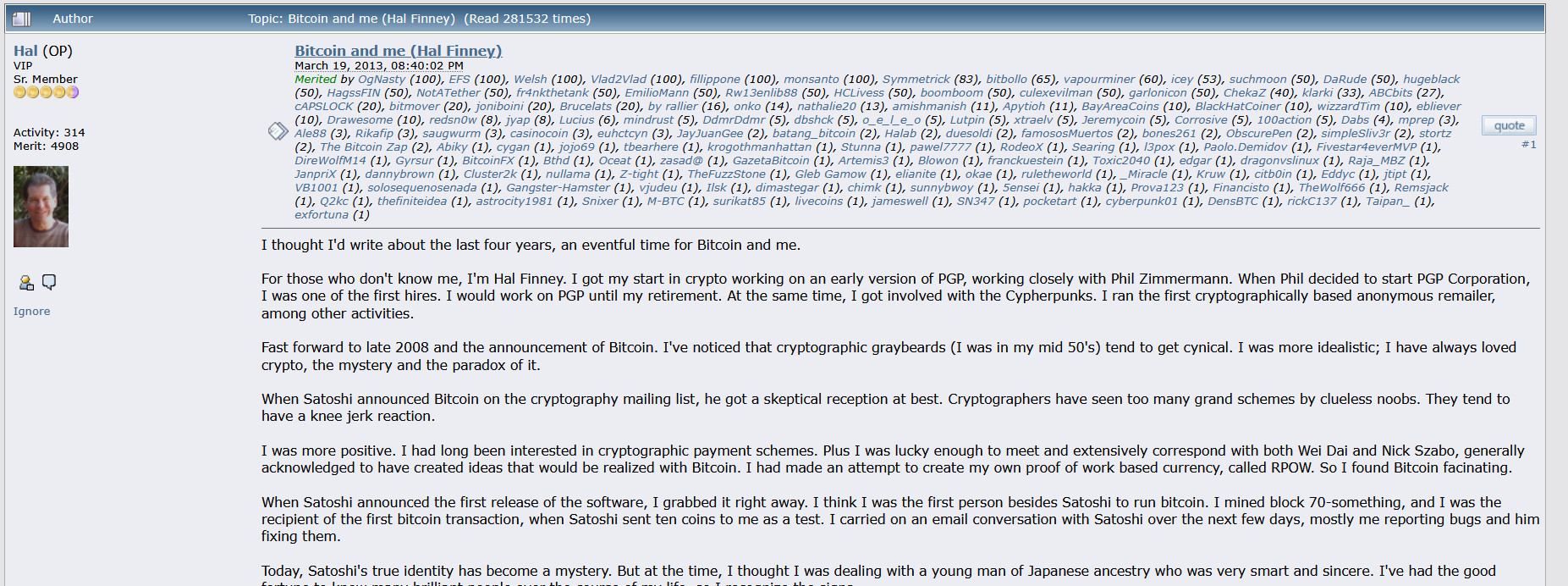
On March 19, 2013, Hal Finney published what would become his final substantial post on the Bitcointalk forums.
The thread was titled “Bitcoin and Me (Hal Finney).”
It was not an announcement. It was not a technical discussion. It was a personal history.
Nostalgic Moment
I remember reading that thread for the first time in 2013. I had found Bitcointalk through a tech blog I was following at the time. I did not understand everything Finney wrote about the cryptography, but I understood the feeling of it. The way he described running that first node, watching the early transactions, talking with Satoshi. It felt like reading a letter from someone who had been present at the beginning of something enormous and had the grace to describe it simply. I sat with that post for a long time. I still think about it.
What He Actually Wrote
Finney opened the post by describing his early involvement with cryptography and the cypherpunk movement. He traced the path that led him to Bitcoin, describing how he had been “intrigued” when Satoshi posted the whitepaper to the cryptography mailing list in 2008.
He described running the software in the early days when it was just him and Satoshi. He recalled finding bugs, emailing patches, and watching the system slowly stabilize.
He described buying pizza with bitcoin. He described getting excited as the price rose and then “forgot about it” when it crashed. He described rediscovering his wallet years later.
And then, near the end, he described his ALS.
He wrote that he was “lucky” to have lived at the right time to contribute to something meaningful. He said he hoped that Bitcoin would succeed and make the world a better place.
He signed off by saying he thought he had made his peace.
The post was direct, warm, and completely free of self-pity. It read like a man who had genuinely arrived somewhere of acceptance and wanted to share that with the people he considered his community.
Primary Source
Read the original thread in full on the Bitcointalk archives:
Bitcointalk.org — “Bitcoin and Me (Hal Finney)” — March 19, 2013
A preserved copy is also available through the Wayback Machine at web.archive.org.
His Last Words: August 9, 2013
After the “Bitcoin and Me” post, Finney’s presence on Bitcointalk grew infrequent. His contributions became shorter, rarer. But he did not disappear immediately.
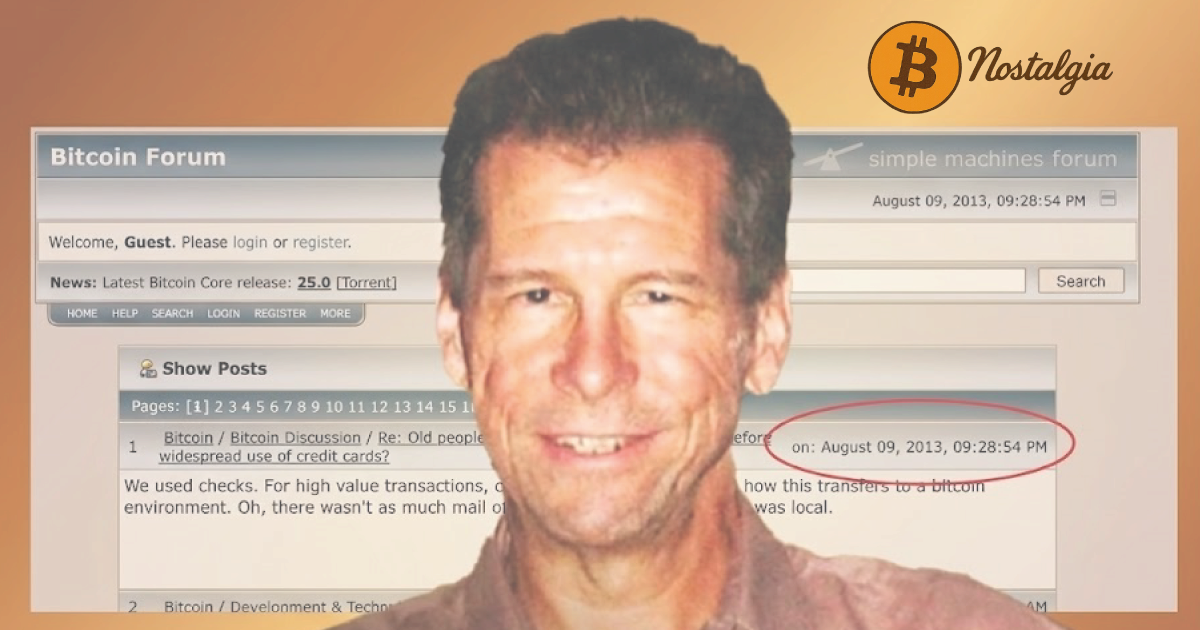
On August 9, 2013, Hal Finney made his final recorded post on the Bitcointalk forums. The thread was titled “Old people, how did you protect purchases before widespread use of credit cards?”
It was not a grand exit. It was not a farewell addressed to the community. It was a quiet, curious reply in an ordinary discussion thread — the kind of post that someone makes when they are still engaged with the world, still interested in conversation, still present.
That ordinariness is what makes it so affecting. There was no announcement of a final departure. No dramatic last word. Just a man participating in a forum discussion, the way he had done hundreds of times before, and then — silence.
You can view his complete post history on his Bitcointalk profile (user ID 2436). The archive is still there. The thread is still readable. The date remains: August 9, 2013.
Archive Record
Hal Finney’s final Bitcointalk post — August 9, 2013:
bitcointalk.org — Topic #270898, Message #2901342
His complete Bitcointalk post history (user ID 2436):
bitcointalk.org/index.php?action=profile;u=2436;sa=showPosts
The Community’s Response: A Forum That Went Quiet
Within hours of the “Bitcoin and Me” post going live, the Bitcointalk forums — a place known for technical arguments, price speculation, and the general noise of a young internet community — fell into something resembling reverence.
The replies were careful. People took their time.
Some users who had been active on the forums since 2010 wrote that they had not known about his diagnosis. Others said they had suspected something was wrong from the infrequency of his recent posts. A significant number simply thanked him.
For a community that had developed its own combative culture, the response to Finney’s post was notable for what it was not. There was no argument. No price talk. No tribalism.
There was just a group of people sitting with the weight of something real.
The Silence That Followed
After August 2013, Hal Finney’s presence on Bitcointalk disappeared entirely. He continued to correspond with individuals by email as long as he was able, according to accounts shared by his family and community members who knew him.
By 2014, he was communicating primarily through his eye-tracking system. His body had been largely stilled. His mind had not.
Hal Finney died on August 28, 2014. He was 58 years old.
Per his wishes, his body was preserved through cryonic suspension by the Alcor Life Extension Foundation in Scottsdale, Arizona — a decision consistent with a man who had spent his adult life thinking seriously about the future of technology and what it might one day make possible.
What His Words Left Behind
The bitcoin nostalgia that many in this community carry is not simply about missed financial opportunity. It is about something more difficult to name.
It is the feeling of having been present, or close to present, at the emergence of something genuinely new. And the slow recognition that the human beings who built that thing were extraordinary in quiet ways that the price charts have obscured.
Hal Finney was one of those people.
He was not the loudest voice in the room. He did not build a company or launch a fund or become a public figure in the way that Bitcoin’s later era would produce. He was an engineer who cared deeply about the work, who found Satoshi’s idea compelling when almost no one else did, and who kept contributing even as his body failed him.
What the Archive Preserves
The “Bitcoin and Me” thread is still accessible through Bitcointalk’s archives and through the Wayback Machine. It has been read hundreds of thousands of times.
Researchers and historians who study the early cypherpunk movement return to it regularly. It remains one of the most complete first-person accounts of Bitcoin’s earliest days from someone who was genuinely present for all of it.
But its significance is not only historical. It is human.
The people who shaped Bitcoin’s early days were not mythological figures. They were human beings sitting at laptops in quiet rooms, trying to build something they believed in.
Hal Finney was among the most human of them.
Continue Reading: More Human Stories from the Archive
The story of Hal Finney is not just about one man. It belongs to a larger archive of human experiences that Bitcoin’s cultural history has too often left behind.
Pillar — Human Stories & Regrets
The Psychology of Crypto Regret: Understanding Bitcoin Nostalgia, FOMO, and Missed FortunesIf what you are carrying is something closer to grief than history, this is the archive’s dedicated space for it. Why the “what if” of early Bitcoin hits so differently than other missed opportunities — and why that feeling deserves to be understood, not dismissed.
From the Archive — Human Stories & Regrets
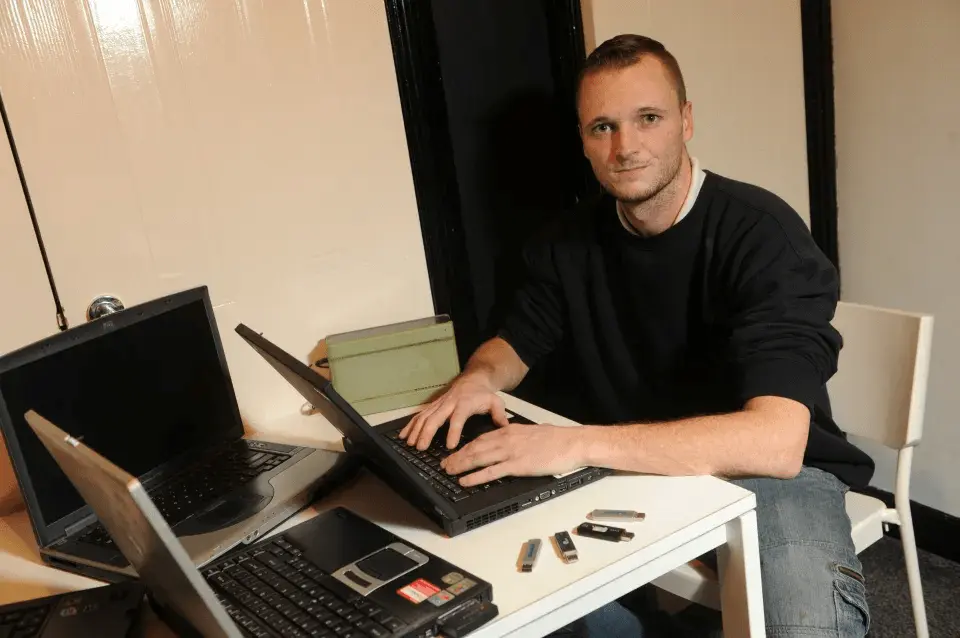
Eight Thousand Bitcoin, One Mistake: The Story of James Howells and the Hard Drive He Can Never Get BackOne of the most quietly devastating stories in Bitcoin’s history. Eight thousand bitcoin in a landfill. A story that still has no resolution.
From the Archive — Human Stories & Regrets
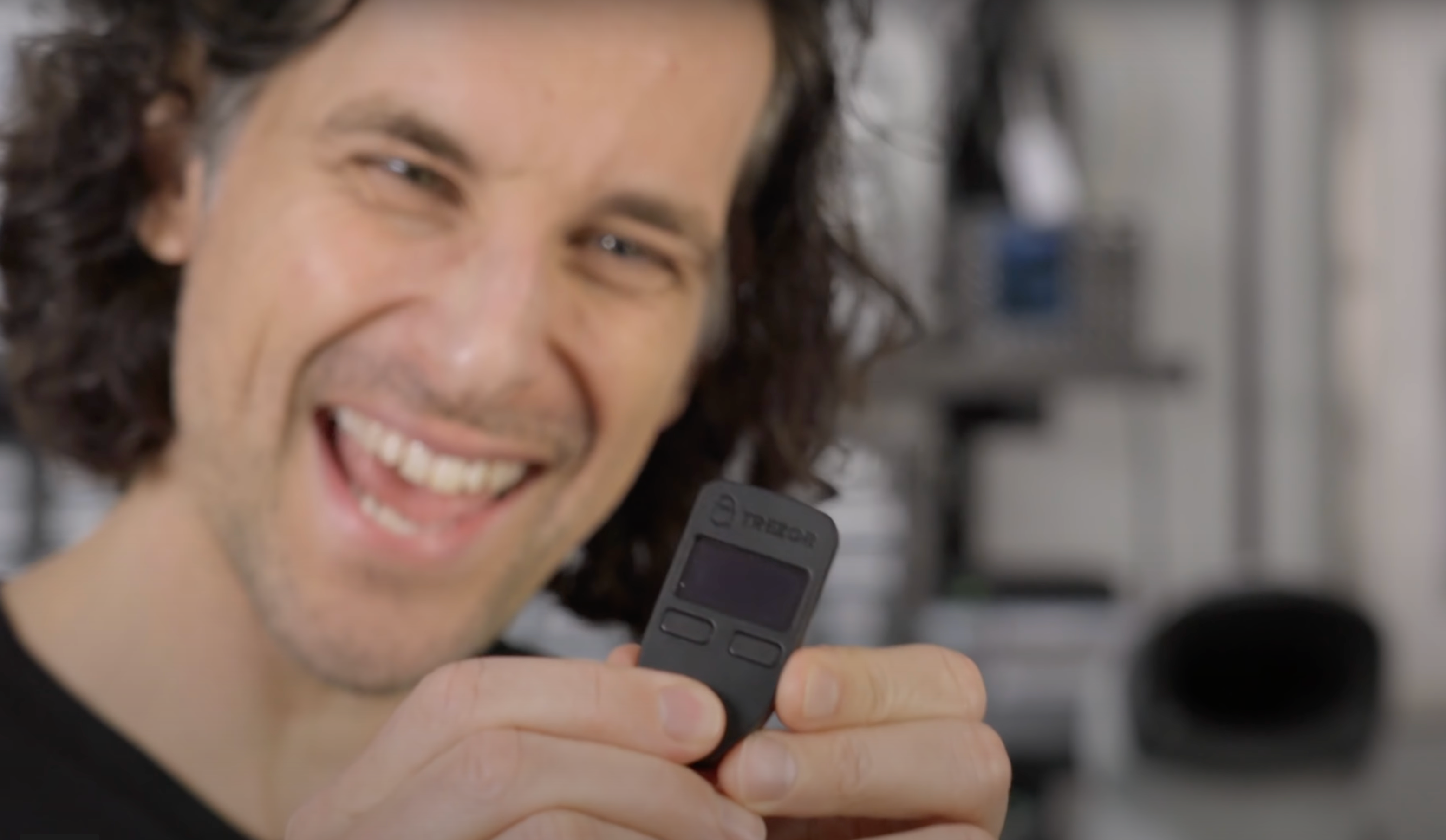
The PIN They Forgot: How a Hardware Hacker Pulled $2 Million from the PastNot all losses are permanent. The story of what happens when patience, skill, and a little luck converge in the right moment.
From the Archive — Human Stories & Regrets
From $0.0008 to $70,000: The Emotional Rollercoaster of Early Bitcoin HoldersThe full emotional arc of what the early years actually felt like from the inside. History as emotional record — one of the archive’s most-read pieces.
Frequently Asked Questions
Hal Finney’s last recorded post on Bitcointalk was made on August 9, 2013, in an ordinary discussion thread titled “Old people, how did you protect purchases before widespread use of credit cards?” There was no dramatic farewell. Just a quiet reply in a community discussion — and then silence. His most significant final message to the community remains his March 19, 2013 post titled “Bitcoin and Me (Hal Finney),” in which he described his journey alongside Satoshi and openly discussed his ALS diagnosis.
Hal Finney was an American software developer and cryptographer who became the first person to receive a Bitcoin transaction. On January 12, 2009, Satoshi Nakamoto sent him 10 BTC in what is recorded as Block 170 — the very first peer-to-peer Bitcoin transaction in history. Finney was also a longtime contributor to the cypherpunk movement and had previously worked on PGP encryption software.
In his March 19, 2013 Bitcointalk post titled “Bitcoin and Me,” Hal Finney traced his personal history with Bitcoin from the very beginning — reading Satoshi’s whitepaper, running the software in the early days, finding bugs, submitting patches, and watching the network stabilize. He also described buying pizza with bitcoin, watching early price movements, and rediscovering his wallet years later. Near the end, he disclosed his ALS diagnosis and wrote that he considered himself “lucky” to have contributed to something meaningful.
Hal Finney died on August 28, 2014, at the age of 58, from complications of ALS. Per his wishes, his body was preserved through cryonic suspension by the Alcor Life Extension Foundation in Scottsdale, Arizona — a decision consistent with his lifelong interest in the future of technology and human longevity.
The first peer-to-peer Bitcoin transaction took place on January 12, 2009. Satoshi Nakamoto sent 10 BTC to Hal Finney, recorded on the blockchain as Block 170. Finney confirmed the milestone with a now-legendary post on X (then Twitter) reading simply: “Running bitcoin.” The transaction is considered one of the most significant moments in cryptocurrency history.
Help Keep This Memory Archive Alive
This archive exists because these stories deserve to be told with care. No ads. No sponsored tokens. No agenda other than preservation.
If the story of Hal Finney moved you, if you believe that the human side of Bitcoin’s history is worth protecting from being swallowed entirely by price charts and headlines, consider contributing to keeping this archive online and growing.
Keep This Archive Alive
Every satoshi contributed is a vote for memory over forgetting. Bitcoin Nostalgia runs on community support. Thank you for reading. Thank you for remembering.
bc1qu6v3m430v9ca0kxm3qk8cewcwukmfpf5rqakrj
Every sat counts. Every story matters.
From one nostalgic to another,
Angel Salvador Dominguez
Founder & Chief Archivist, Bitcoin Nostalgia
bitcoinnostalgia.org
Disclaimer: This article is a historical and cultural archive. Nothing in this publication constitutes financial advice, investment guidance, or price speculation. Bitcoin Nostalgia is a memory archive, not a financial publication. All historical references are based on publicly available records, archived forum posts, and documented community history. Sources include Wikipedia — Hal Finney, Bitcointalk.org archives, Hal Finney’s last post (August 9, 2013), and Alcor Life Extension Foundation.