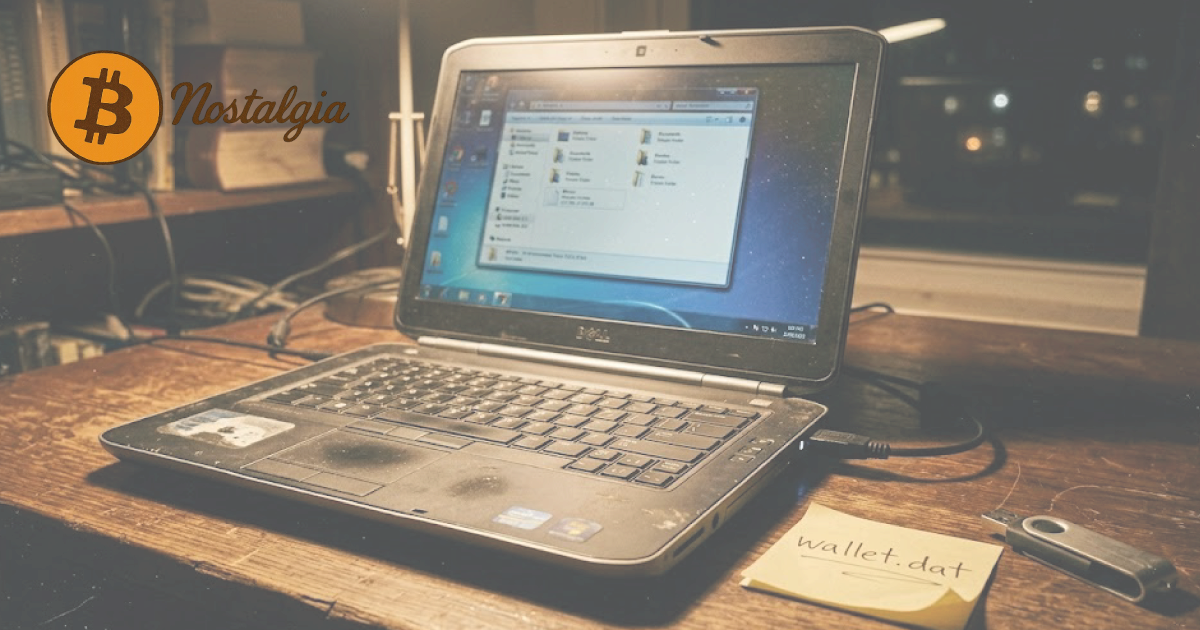

There is a particular kind of silence that follows a forgotten password.
Not the mild frustration of a locked email account. Not the annoyance of a reset form. A deeper silence. The kind that settles in when you realize the file sitting on your hard drive might hold a fortune in early Bitcoin, and the only thing standing between you and it is a string of characters you wrote down in a notebook you can no longer find.
This is the story that has played out in basements, on old laptops, and in desperate late-night Reddit threads for over a decade. It is one of the most quietly heartbreaking chapters in Bitcoin's history. And in recent years, a small but determined community of programmers discovered that a custom Python script, the right wordlist, and an enormous amount of patience might be the last key left.
This story belongs inside the larger archive we are building here at Bitcoin Nostalgia. If you have not yet explored the full record, the pillar page on this topic, Forgotten Fortunes: The Complete History of Early Bitcoin Wallets, Exchanges, and Lost Keys, is where the whole picture comes together.
The Wallet.dat File: A Digital Artifact Nobody Thought to Protect
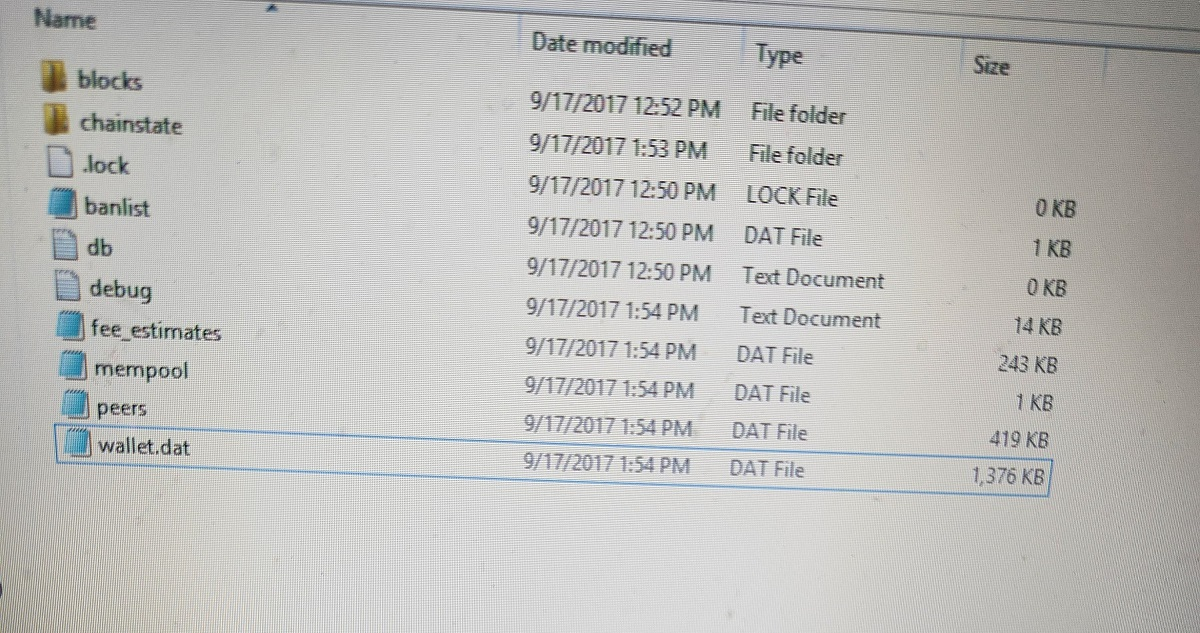
In 2013, Bitcoin was still a project most people had only half-heard of. Forums like Bitcointalk were alive with speculation, strange energy, and a community that felt like a secret club. Early users downloaded the Bitcoin Core client, let it sync for hours, and stored their coins in a file called wallet.dat.
Nobody treated that file like gold. Why would they? At the time, the idea that those early coins would one day represent staggering value existed only in the imaginations of a very small number of believers. Most people backed up nothing. Others encrypted the file with a passphrase they assumed they would always remember.
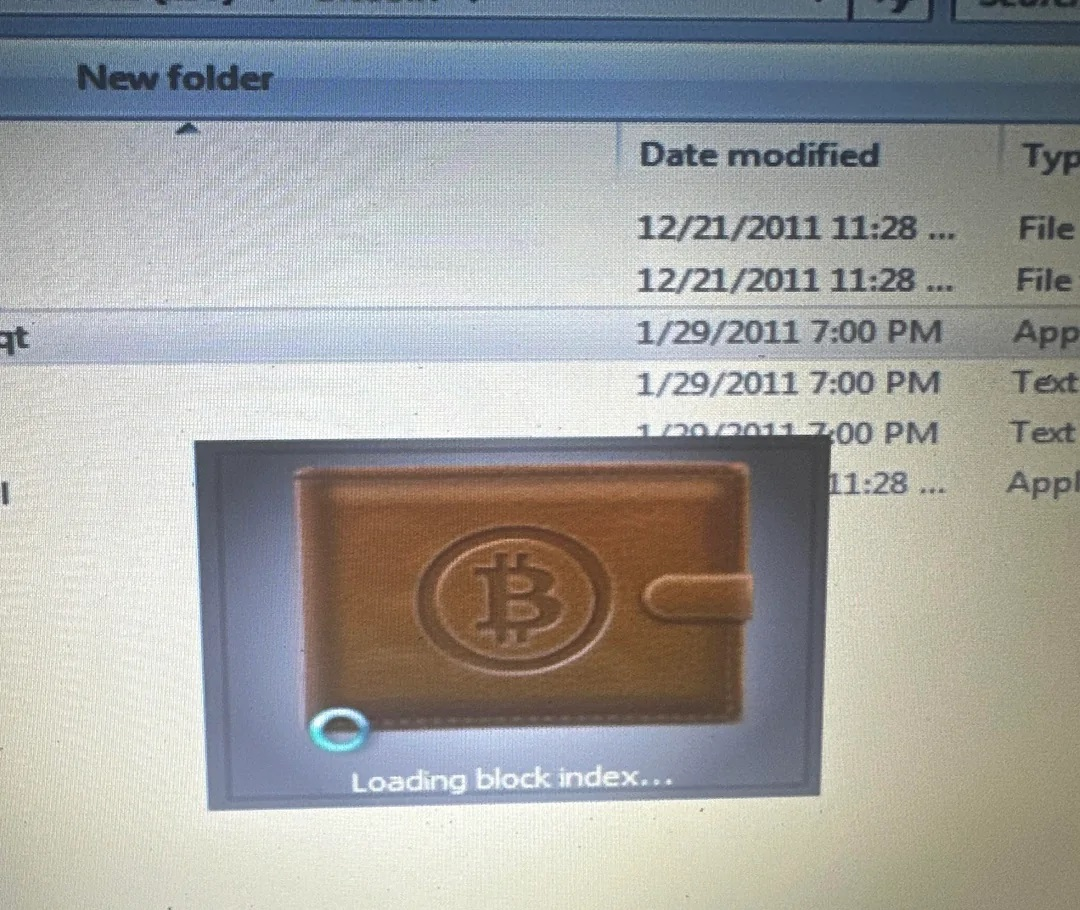
Years passed. Hard drives were wiped. Old laptops were sold. And some files were found again, dusty and intact, on external drives buried in storage boxes.
The problem was the password.
The Encryption That Outlasted the Memory
Bitcoin Core used AES-256 encryption for wallet protection. It was, by design, extremely difficult to brute-force without some knowledge of what the password might have been. Without a hint, even powerful hardware could take millions of years working through random combinations.
But most people are not truly random. They reuse patterns. They favor certain words, certain numbers, certain habits. That small human detail became the foundation of every recovery attempt that followed.
The Python Script: A Modern Tool for a Decade-Old Problem
The recovery community that grew around lost Bitcoin wallets became quietly sophisticated. Developers shared tools. Wordlists circulated on forums. And at the center of many attempts was a deceptively simple approach: a custom Python script paired with a targeted password list.
The core logic was not complicated. The script would take a wallet.dat file, attempt to decrypt it with a candidate password, and move on to the next one if it failed. The art was in the list, not the loop.
Building the Right Wordlist
A successful recovery almost never came from a random brute-force attack. It came from reconstructing the mental landscape of a person in 2013. What did they typically use for passwords at that time? Did they favor song lyrics, birthdays, favorite teams, or a pet's name combined with a number?
The most effective Python-based tools, like btcrecover, which remains one of the most widely referenced open-source recovery scripts in this space, allowed users to define rules. Add a capital letter here. Substitute a zero for the letter O there. Try every combination of a base word with common suffixes.
It was part programming, part archaeology.
Where Claude Came In
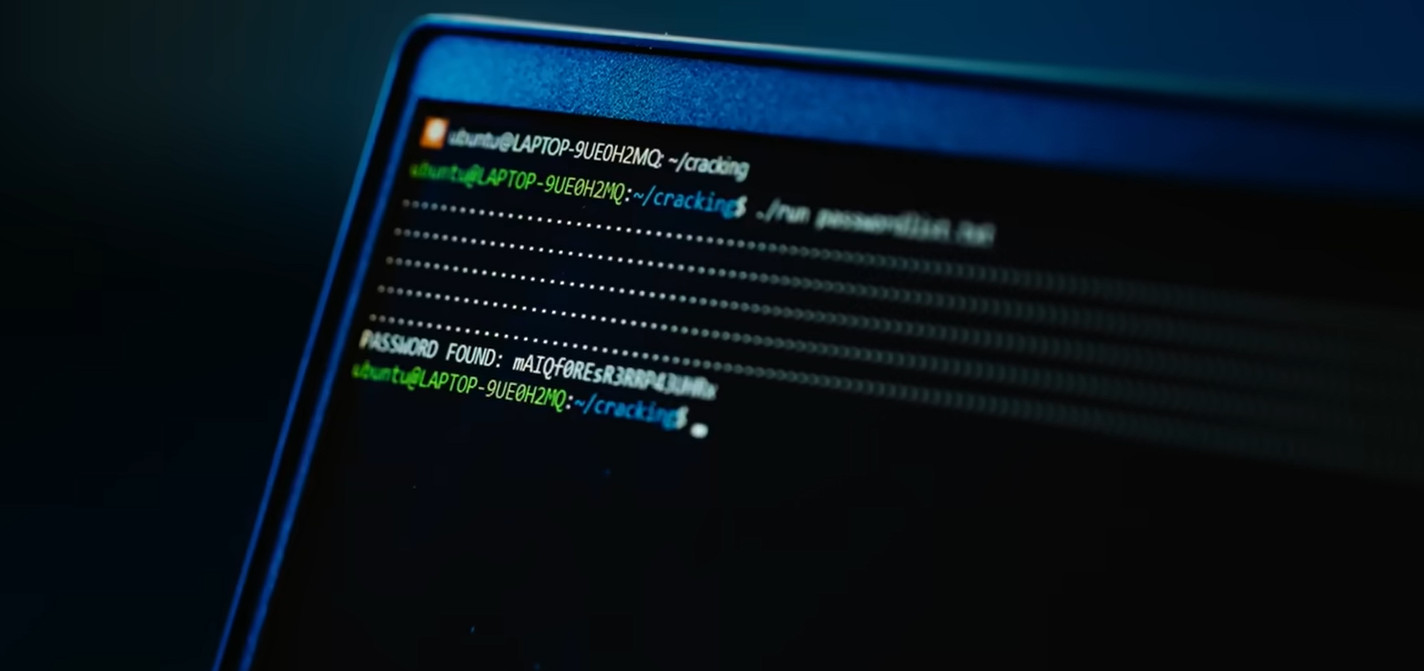
What made this particular recovery story stand apart was not just the patience behind it, but the tool used to write the script itself. The person behind the wallet had no deep programming background. He knew what he needed, a loop that would pull candidate passwords from a list and test each one against his encrypted wallet.dat file, but translating that idea into working Python code was a wall he could not climb alone. That is when he turned to Claude, Anthropic's AI assistant, and asked it to help him build the script from scratch.
The conversation that followed was methodical. He described his situation, the wallet file location, the format of his candidate list, the output he needed. Claude generated a working Python script, explained each function line by line, and helped him adapt it when his first wordlist came up empty. When the script needed to handle encoding edge cases in older wallet files, Claude debugged it with him in real time. It was not a dramatic moment, no single prompt that produced a magic solution. It was a back-and-forth that lasted hours, the kind of quiet, technical collaboration that rarely makes headlines but represents exactly what this new generation of AI tools can do for people who are not developers.
For someone standing outside the door of their own past, that kind of patient, line-by-line help was the difference between giving up and trying one more night.
Nostalgic Moment
I came across a thread on a recovery-focused subreddit that stopped me completely. A user going by an old Bitcointalk-style handle wrote about finding a wallet.dat file on a USB drive they had used back in 2013.
They remembered encrypting it. They remembered writing the password somewhere. They just could not remember where.
Over the following six months, with help from the community, they built a wordlist from everything they could reconstruct: old journals, email drafts, even forum posts they had written in that period. The Python script ran through the list over several nights.
On the forty-third morning, it found the password.
The thread did not end with celebration the way you might expect. It ended with a single quiet line from the user: "I am going to sit with this for a moment."
That sentence has stayed with me ever since. It captured something that pure price history never could.
The Tools That Made It Possible
The recovery landscape that emerged in the 2010s and matured into the 2020s relied on a handful of key open-source projects. Most were built by volunteers, shared freely, and improved through community contributions.
btcrecover: The Community's Best Known Script
btcrecover, originally developed by Christopher Gurnee, became the most referenced tool in the Bitcoin wallet recovery world. It was designed specifically for Bitcoin Core wallet files and later expanded to support other wallet formats.
The project lives on GitHub and has been updated and maintained by contributors over the years. It supports GPU acceleration for faster processing, complex password mutation rules, and multi-threaded operation on modern hardware.
For many people who found old wallet files, this project was the first thing they searched for.
Hashcat and the Professional Layer
For those with more technical backgrounds or hardware resources, tools like Hashcat brought professional-grade password recovery into the mix. By extracting a hash from the wallet.dat file, users could run Hashcat against massive dictionaries at speeds that a pure Python loop could not match.
The combination of community-built wordlists with hardware acceleration changed the calculation for older, simpler passwords significantly.
The Human Architecture of Forgetting
What makes these recovery stories so resonant within the bitcoin nostalgia community is not really the technology. It is the portrait of human memory they reveal.
In 2013, nobody imagined they were setting a password for something that would need to survive a decade. They were setting a password the same way they always did: quickly, habitually, with the assumption that they would always have access to this machine, this moment, this clarity of mind.
The wallet.dat file as an artifact holds something beyond the coins themselves. It holds a snapshot of who a person was at a specific moment in history, encoded in a string of characters they chose almost without thinking.
Why This Story Belongs to the Early Bitcoin Culture
The lost wallet narrative is one of the defining human stories of the early Bitcoin era. It runs parallel to every headline about price and every debate about regulation. While those conversations played out in public, thousands of private dramas were unfolding on hard drives across the world.
These stories are part of what we are trying to preserve here. They are the texture of the revolution, not just the ledger.
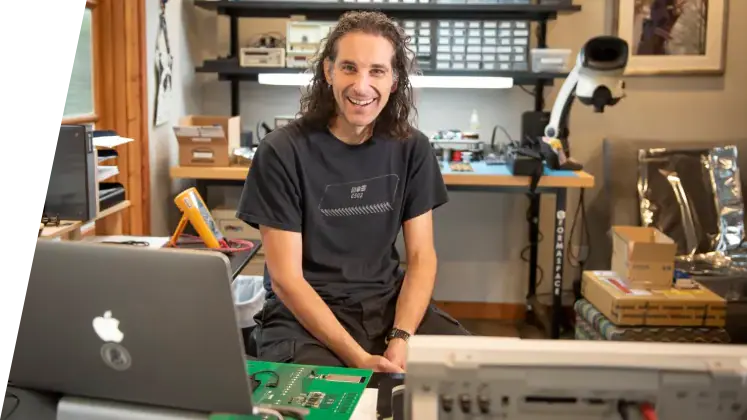
For a parallel story of technical recovery done at the highest level, the account of hardware hacker Joe Grand and a locked Bitcoin wallet is one of the most dramatic in this space:
Related Archive
The Man Who Hacked Time: Joe Grand, a Lost Bitcoin Wallet, and the Bitcoin Nostalgia of Almost Losing It All →One of the few cases where the past was actually recovered rather than just remembered. A story about patience, obsession, and what it means to hold a piece of early Bitcoin history.
And if you want to explore the raw data behind early Bitcoin transactions and wallet history in an interactive way, this archive tool offers a window into that era:
Related Archive
Interactive Tools: Visualizing Old Wallets and Historical Transaction Data →Explore the block explorers, transaction graphs, and archived client interfaces that let you see early Bitcoin the way it actually looked, one block at a time.
What a Python Script Cannot Recover
The technical success stories are real. Passwords are found. Wallets are unlocked. But for every recovered file, there are hundreds more where the password is genuinely gone.
No wordlist captures every possible combination. No mutation rule covers every variation. And for wallets encrypted with a truly random, strong passphrase, no Python script running on consumer hardware will ever reach the answer within a human lifetime.
Those wallets remain sealed. The coins inside them sit dormant on the blockchain, provably unspent, mathematically present but humanly unreachable.
There is something almost poetic about that. A permanent record of early belief, locked behind a door that may never open again.
The Ethics of Recovery
The recovery community has, by and large, been careful to frame this work as a personal and private matter. The tools exist for people recovering their own wallets or helping someone recover a wallet that legitimately belongs to them.
There are no ethical shortcuts in this space. And the most respected voices in the community have always been clear about that boundary.
Frequently Asked Questions
What is a wallet.dat file and why is it hard to recover?
A wallet.dat file is the local storage file used by the original Bitcoin Core client to hold private keys and transaction data. If the wallet was encrypted with a passphrase, the file cannot be opened without that exact passphrase. AES-256 encryption makes brute-force attempts extremely slow, which is why targeted wordlists and memory reconstruction are central to any serious recovery effort.
What is btcrecover and how does it work?
btcrecover is an open-source Python-based tool designed to help users recover forgotten passwords for Bitcoin Core and other cryptocurrency wallet formats. It works by attempting candidate passwords from a user-provided list, applying customizable mutation rules to each candidate, and checking whether any candidate successfully decrypts the wallet. It is available on GitHub and has been maintained and contributed to by the recovery community over many years.
Is it possible to recover a Bitcoin wallet with no memory of the password at all?
In practice, recovery without any starting point is extremely difficult and often impossible. The most successful recoveries combine a recovered or partially reconstructed password memory with technical tools that can systematically test variations. Completely random, high-entropy passwords from 2013 are generally considered unrecoverable with current technology.
Are there professional services that help with Bitcoin wallet recovery?
A number of professional and semi-professional recovery services exist, some of which have successfully recovered access to older wallets. Quality and transparency vary widely. The most credible operate on a no-recovery, no-fee basis and require verifiable proof of ownership before any work begins. Independent researchers and community experts often discuss service reputation openly on recovery-focused forums.
Why does Bitcoin Nostalgia focus on lost wallet stories?
Lost wallet stories are among the most deeply human chapters in Bitcoin's history. They document the gap between the technical promise of a revolution and the everyday reality of how people actually lived through it. Preserving these stories is part of what this archive is built to do, not to celebrate loss, but to ensure the full texture of the early era is remembered honestly.
Help Keep This Archive Alive
These stories do not have a natural home on financial news sites or price tracking platforms. They live here, in archives like this one, maintained by people who care more about the history than the headlines.
If the human side of Bitcoin's early years matters to you, and if you believe these records deserve to survive, consider supporting the Bitcoin Nostalgia archive. Every contribution, however small, helps preserve the culture, the chaos, and the quiet moments that shaped this movement.
Keep This Archive Alive
Every satoshi contributed is a vote for memory over forgetting. Bitcoin Nostalgia runs on community support. Thank you for reading. Thank you for remembering.
bc1qu6v3m430v9ca0kxm3qk8cewcwukmfpf5rqakrj
Keep the memory alive.
Angel
Founder & Chief Archivist, Bitcoin Nostalgia
bitcoinnostalgia.org
Disclaimer: This article is a historical and cultural archive. Nothing in this publication constitutes financial advice, investment guidance, or price speculation. Bitcoin Nostalgia is a memory archive, not a financial publication. All historical references are based on publicly available records, archived forum posts, and documented community history. Sources include the Bitcoin whitepaper, Bitcointalk.org archives, the Bitcoin Wikipedia entry, and the btcrecover project on GitHub.