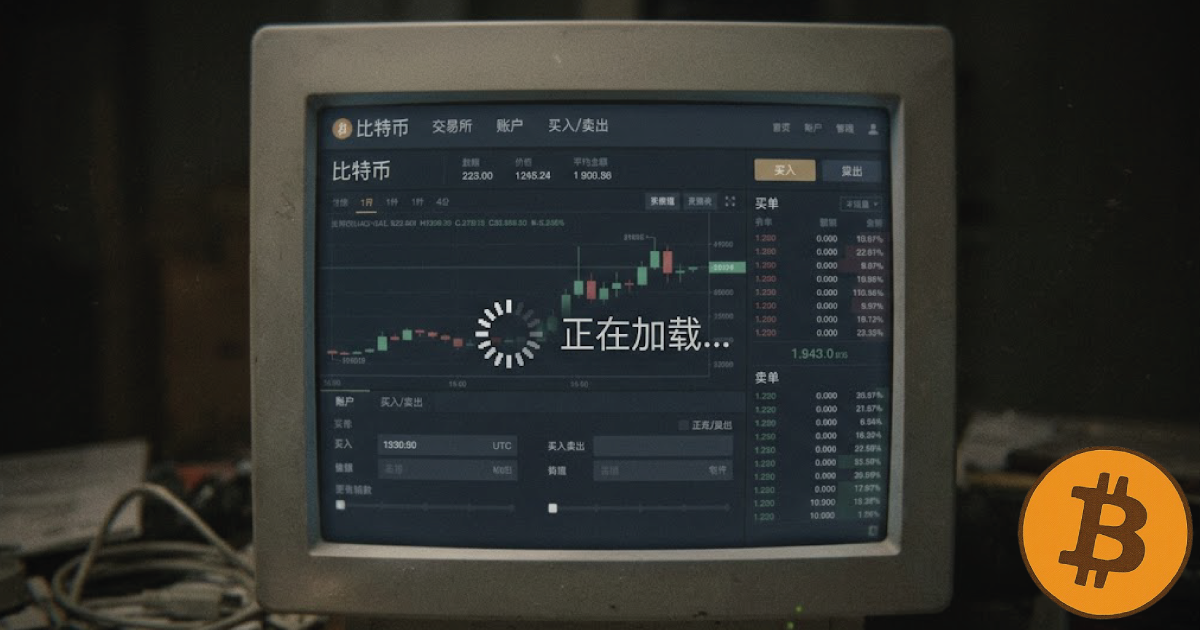
There was a moment, sometime around 2010, when Bitcoin did not roar. It whispered.
It whispered in the comment threads of obscure tech blogs. It whispered in the IRC channels where cypherpunks argued about hash functions past midnight. It whispered in the Bitcointalk forums, where a handful of people were having a conversation that felt too strange, too radical, too beautiful to be real.
I remember following those threads the way you follow a strange and wonderful rumor. I never bought in. Not then. Personal circumstances kept me on the outside of every transaction, every wallet, every block. But I was there, reading. Watching. Absorbing every word.
That era is fading. The bitcoin nostalgia of those early years gets buried deeper with every price spike, every institutional announcement, every mainstream headline. The human stories, the humor, the sheer improbability of what those early adopters were building together, these things deserve to be remembered.
This is not an article about what Bitcoin is worth today. This is about what it felt like when it was worth almost nothing, and why those years mattered more than almost anyone understood.
The World Before the Satoshi Had a Name
When "Whole Coins" Were the Only Unit Anyone Talked About
In Bitcoin's earliest days, nobody talked about satoshis. The denomination that would eventually carry Satoshi Nakamoto's name did not even have a formal definition until later in the community's timeline.
People talked in whole coins. Or fractions. Someone would post on Bitcointalk in early 2010 and casually mention they had "a few hundred Bitcoin" sitting in a wallet on their desktop. The bitcoin 2010 price hovered around fractions of a cent. Whole coins passed between early adopters almost like trading cards, or like tokens in a game that most of the world had not yet been invited to play.
What is remarkable, looking back, is how little any of it felt like money. It felt like math. Like a proof of concept. Like someone had cracked open a door in the wall of the financial system and was excitedly waving everyone inside to look.
Pillar Archive
The Genesis Era: A Comprehensive Guide to Bitcoin's Early Days and Technological Origins →If you want the full technical context for why that architecture mattered so much, the Genesis Era guide covers the cryptographic foundations and the community's earliest milestones in remarkable depth.
The First Bitcoin Transaction and the Weight It Carried
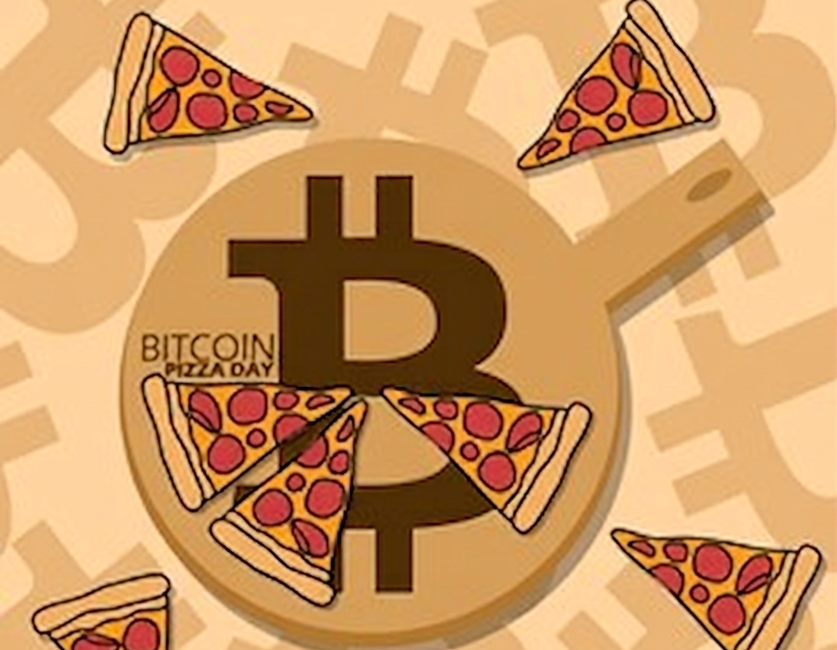
The first bitcoin transaction with a recorded real-world value took place on May 22, 2010. Laszlo Hanyecz, a programmer in Florida, paid 10,000 BTC for two pizzas. The amount sounds absurd from any vantage point beyond those years, but inside that moment, it was a milestone.
Laszlo was not being reckless. He was being a pioneer. He was proving that Bitcoin could move. That it could carry value between two human beings and land as something tangible on the other side. That first bitcoin transaction was not about the pizzas. It was proof that the system worked.
The Bitcointalk thread where Laszlo posted his request is still archived. Reading it today is like finding a message in a bottle. The casual tone. The excitement buried in plain technical language. It is one of the clearest windows we have into what was Bitcoin like in the beginning.
Related Archive
Remembering the Pizza: A Bitcoin Nostalgia Look Back at the First Commercial Transaction →May 22 is now observed annually as Bitcoin Pizza Day. Read the full archive of that moment and its lasting cultural legacy.

The Quiet Years: Pre-2013 Bitcoin and the People Who Held the Flame
A Community That Fit in a Single Forum Thread
Pre-2013 Bitcoin had a quality that I have never seen replicated anywhere in the years since. It was small enough that a single dedicated reader could follow almost every meaningful conversation happening in the community at once.
The Bitcointalk forums were the town square, the laboratory, and the coffee shop all at once. Early bitcoin adopters were not just trading a currency. They were building a shared mythology in real time. Debating. Arguing. Encouraging each other through every technical setback and every media dismissal.
I spent hours in those archives. Reading arguments about mining difficulty. Reading early adopters explain the blockchain to skeptical newcomers with a patience that felt almost parental. There was a generosity of explanation in those threads that the internet has largely lost.
Related Archive
What Defines the 'Good Old Days' of Bitcoin? A Look Back at the Era That Started It All →For a deeper look at what defined that community's spirit, this cluster piece traces the ethos of those early years through the voices of the people who lived them.
Bitcoin Price History Sentiment: The Feeling Behind the Numbers
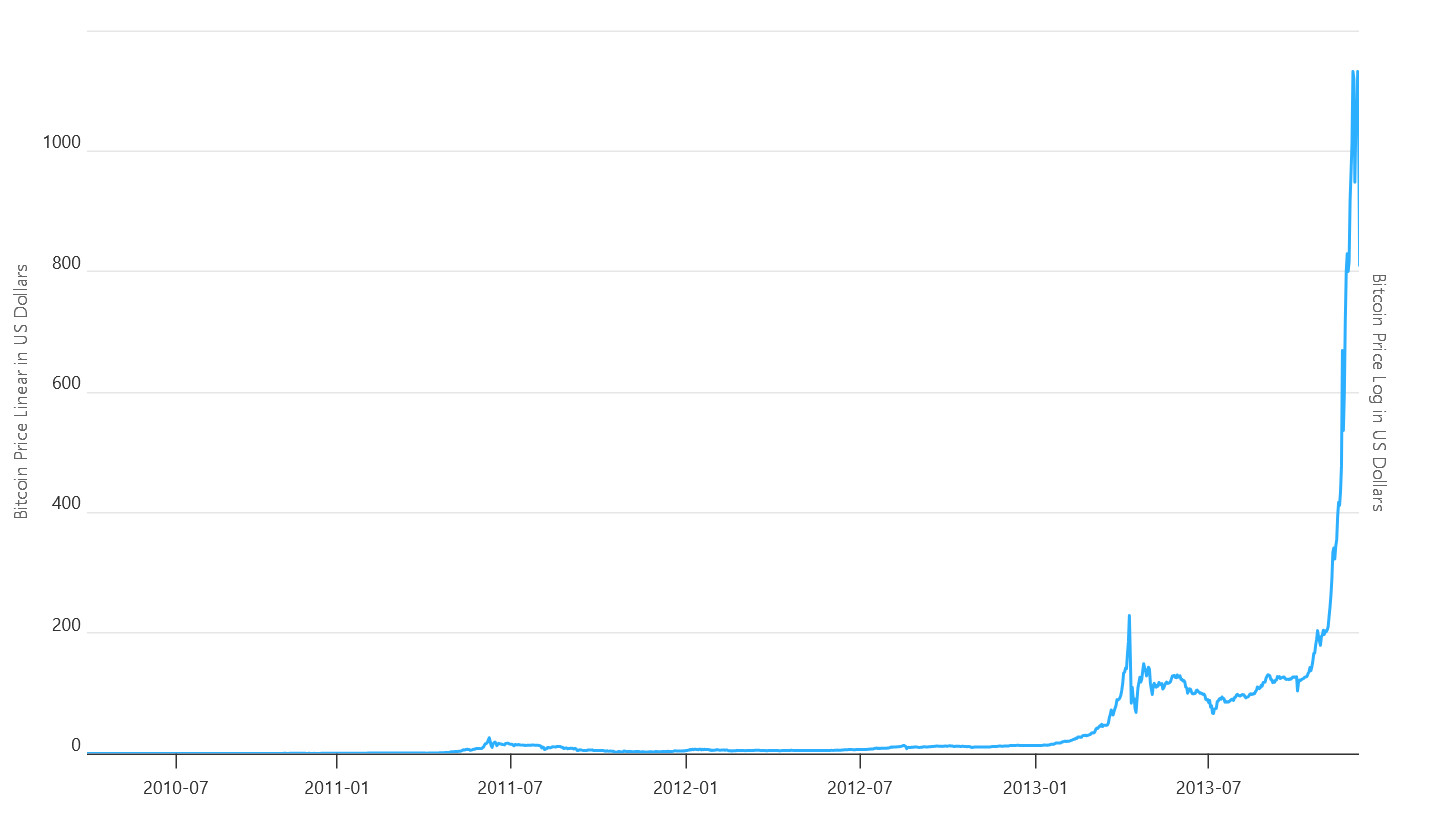
Bitcoin price history sentiment in the pre-2013 era was almost impossible to describe in the language of modern finance. There was no FOMO in the way we know it now. There was no institutional anxiety, no quarterly report framing, no fear of regulatory crackdowns.
There was curiosity. There was evangelical certainty from some corners, quiet skepticism from others, and from the largest group, a watchful, fascinated neutrality. People were not asking "should I buy this" in the same breath as someone watching a ticker. They were asking "is this real, and if it is, what does it mean for everything we know about money?"
That question had a weight to it. It was not a trading question. It was a philosophical one. And the community debated it with genuine intellectual seriousness while also, somehow, making some of the earliest and strangest internet humor I have ever witnessed.
Learning to Count in Satoshis: When the Unit Became a Statement
The Subdivision That Changed the Way People Thought
As Bitcoin's price began to move in 2011 and 2012, something shifted in the language of the community. Whole coins became expensive, then very expensive. The denomination structure that Satoshi had built into the protocol, the ability to divide a single coin down to one hundred millionth, became not just a technical feature but a cultural statement.
Naming that smallest unit after Satoshi Nakamoto was a community decision that happened organically. There was no formal vote, no announcement, no press release. The name appeared in forum discussions, caught on because it was right, and stayed. That is exactly how Bitcoin culture worked in those years.
The satoshi made Bitcoin feel accessible again. You did not need a whole coin to be part of the network. You could tip someone on a forum in satoshis. You could run a small transaction as a technical experiment. You could participate in the system for almost nothing, and that participation still meant something.
Related Archive
Comparative Analysis: Early Bitcoin's 'Wild West' Ethos vs. Current Institutional Perception →The contrast between that early accessibility and the way the institutional era redefined Bitcoin's identity is explored in detail in this archive piece.
Satoshi's Vision: The Design Intent Behind Every Fraction
Satoshi Nakamoto did not write extensively about the subdivision of coins in the original whitepaper. The bitcoin.pdf document that launched the entire movement is focused on the proof-of-work mechanism, the chain structure, and the problem of double spending.
But the architecture was deliberate. The decision to make each coin divisible to eight decimal places was not accidental. It was a quiet acknowledgment that if the system succeeded, if the vision held, the smallest unit would one day need to carry real value on its own.
There is something almost painfully prophetic about that design choice. Satoshi built the whisper into the protocol from the very beginning.
Related Archive
Satoshi's Vision: What Was Bitcoin Really Like in the Beginning? →This cluster page examines the whitepaper's language alongside the early forum posts that illuminate the thinking behind those original design decisions.
The Sideline View: What It Meant to Watch and Not Touch
I need to be honest about something. There is a specific kind of grief that comes with having been present for a revolution and having missed it, not out of ignorance, but out of circumstance.
I was not wealthy. I was not in a position where I could take a flier on an experimental internet currency, however deeply I believed in what I was reading. Every month there was some more pressing financial reality that kept me on the outside of every transaction I watched those early adopters make.
I do not write this for sympathy. I write it because I believe my experience is the most common one from those years. Most people who followed Bitcoin in 2010 and 2011 did not buy in. Not because they did not see it. Many of us saw it very clearly. The circumstances of ordinary life just made it impossible to act.
What I got instead was something I have come to value on its own terms. I got to watch one of the strangest and most remarkable cultural events in the history of the internet, with no financial stake distorting my perspective. I got to experience it as pure story.
And the story is extraordinary.
Angel Salvador Dominguez, Founder & Chief Archivist, Bitcoin Nostalgia
Why These Memories Matter More Than Any Price Chart
The bitcoin nostalgia I carry is not sentimental weakness. It is archival instinct. The human layer of Bitcoin's history, the arguments, the humor, the genuine idealism, the community of strangers who trusted each other across pseudonymous forum handles, is not preserved in any price chart.
It is preserved in threads. In archived IRC logs. In the memory of people who were there. In projects like this one, built specifically to catch these stories before they disappear entirely beneath the weight of institutional narrative and price obsession.
Bitcoin was not always a store of value. It was first a community of believers. And communities, unlike currencies, cannot be quantified. They can only be remembered.
The early adopters who mined on CPUs and GPUs, who argued about block size at 2am, who sent coins back and forth just to test whether the system held together, they were not investors. They were participants in something unprecedented. Recognizing that distinction matters.
If you are new to this history, I hope this archive gives you a real sense of what those years felt like. If you lived through them, I hope it brings something back.
Frequently Asked Questions
Who were the early bitcoin adopters and what motivated them?
The earliest adopters were primarily cryptographers, cypherpunks, open-source developers, and technically curious individuals who had been following digital currency experiments for years before Bitcoin arrived. They were motivated less by financial gain than by ideological conviction. Many believed deeply in the potential for a decentralized currency that could operate outside traditional banking infrastructure. The community that formed on Bitcointalk from 2009 onward was driven by a shared fascination with the technical elegance of the system as much as anything else.
What was the bitcoin 2010 price, and why did it matter culturally?
In early 2010, Bitcoin had no consistent market price at all. The first recorded exchange rate appeared in October 2009, when New Liberty Standard calculated a value of approximately 0.001 USD per coin based on the cost of electricity to mine it. By mid-2010, following the famous pizza transaction, the price was fluctuating in fractions of a cent. These numbers mattered culturally not because they signaled wealth, but because they signaled legitimacy. Any price, however small, meant the system was real enough that someone was willing to exchange something tangible for it.
What was the first bitcoin transaction with real-world value?
The most widely recognized first real-world Bitcoin transaction occurred on May 22, 2010, when programmer Laszlo Hanyecz arranged to pay 10,000 BTC for two Papa John's pizzas delivered to his home in Jacksonville, Florida. The transaction was brokered through a Bitcointalk forum post and is now commemorated annually as Bitcoin Pizza Day. The original forum thread remains accessible through archived versions and is considered one of the most historically significant documents in Bitcoin's cultural record.
What did pre-2013 bitcoin feel like for people who were just watching?
For observers who were not mining or transacting, the pre-2013 era felt like watching a small city being built in real time by people who were making up the architecture as they went. The Bitcointalk forums were the primary gathering place. Conversations ranged from deeply technical to warmly philosophical. There was a sense that something genuinely new was happening, but without the certainty of outcome that hindsight now supplies. Most silent observers were simply fascinated. Many, like myself, could not act on what they were seeing, but they watched with complete attention.
What is a satoshi and when did the term come into common use?
A satoshi is the smallest unit of Bitcoin, equal to one hundred millionth of a single coin (0.00000001 BTC). The unit is named after Bitcoin's pseudonymous creator, Satoshi Nakamoto. The term began appearing organically in Bitcointalk forum discussions around 2010 and 2011, as the community looked for a natural way to reference tiny fractions of the currency. It became widely standardized in later years as Bitcoin's value increased and transactions in fractions of a whole coin became increasingly common.
Keep This Archive Alive
Bitcoin Nostalgia exists for one reason: to make sure the human story of Bitcoin is not lost to time. No price forecasts. No trading tips. Just memory, carefully kept.
If these archives mean something to you, and if you want to help ensure this project continues documenting the early era before the people who lived it are gone, consider supporting the work directly.
Keep This Archive Alive
Every satoshi sent to this archive is a vote for memory over speculation. Bitcoin Nostalgia runs on community support. Thank you for reading. Thank you for remembering.
bc1qu6v3m430v9ca0kxm3qk8cewcwukmfpf5rqakrj
Keep the memory alive.
Angel
Founder & Chief Archivist, Bitcoin Nostalgia
bitcoinnostalgia.org
Disclaimer: This article is a historical and cultural archive. Nothing in this publication constitutes financial advice, investment guidance, or price speculation. Bitcoin Nostalgia is a memory archive, not a financial publication. All historical references are based on publicly available records, archived forum posts, and documented community history. Sources include the Bitcoin whitepaper, Bitcointalk.org archives, the Bitcoin Wikipedia entry, and the Wayback Machine.